

London Festival of Railway Modelling 2027 - Layouts
The 2027 London Festival of Railway Modelling brings together over 40 of the finest working layouts from the UK and beyond - from N to gauge 1 - invited by The Model Railway Club.
This page gives more information on the layouts that will be at Alexandra Palace on 20/21st March 2027
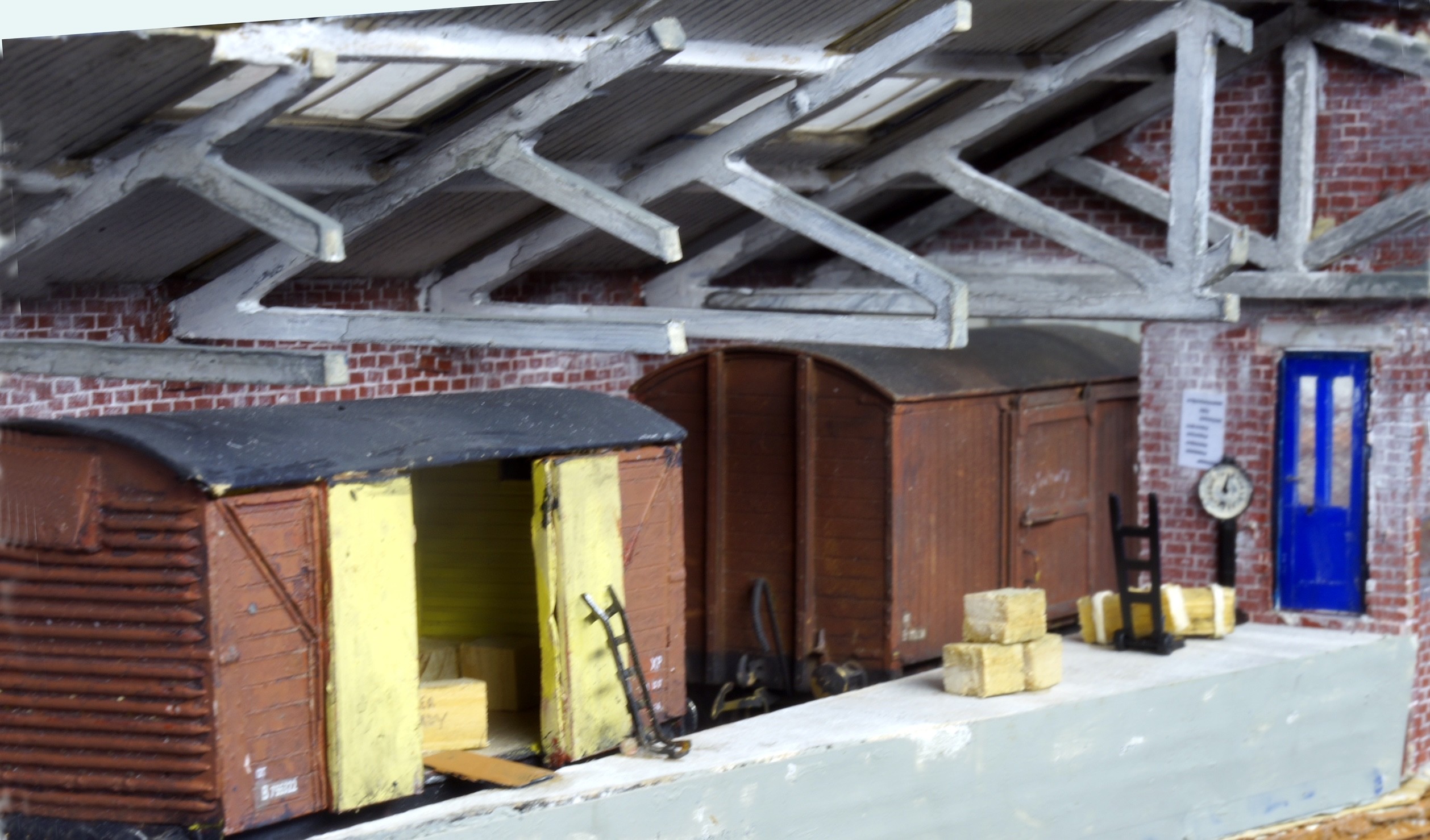
Abbey Street S Scale
Abbey Street is a small station nearer a town centre linked to the out of town main station by a shuttle service. The small yard only handles goods traffic but empties from a coal yard a bit further out of town have to come to the terminus to run round.
A branch line service using a railbus also originates here. Inspiration comes from Colchester St Botolphs and Lowestoft South Side.
The period is the Steam to Diesel transition 1958-62
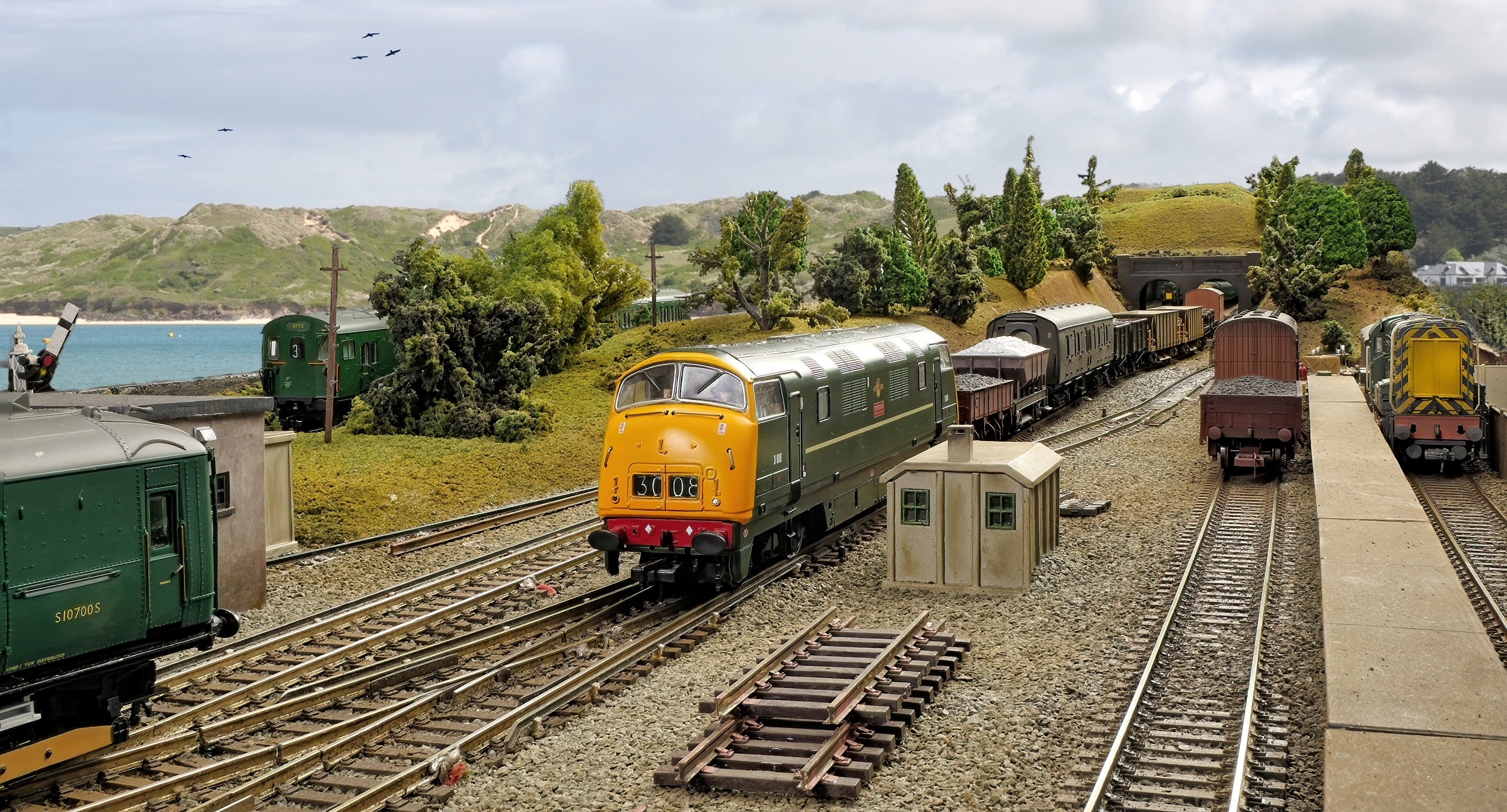
Beckwick OO
Beckwick is a fictitious location situated in Southern England, some forty miles from London. The line opened during the mid 1880s as the railway network spread throughout the country. The current setting is served by all three types of motive power, set during the post war years into the mid 1960s.
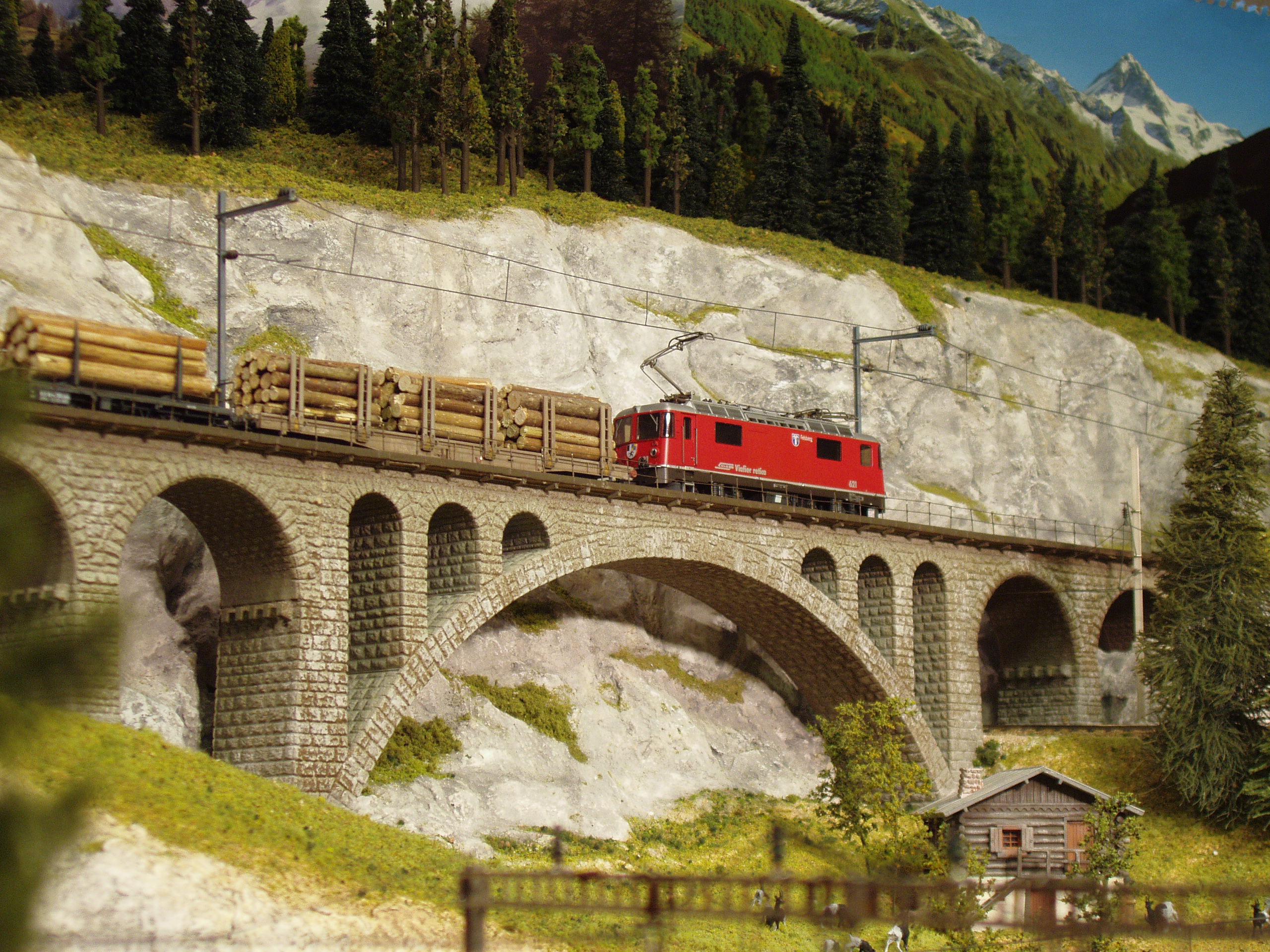
Bergeller Bahn HO
The Bergeller Bahn would have been part of the extensive Rhätische Bahn (RhB) metre gauge network in Eastern Switzerland linking St Moritz in the Swiss Engadine to Chiavenna in Italy. The route was surveyed in 1913 and several plans created but unfortunately the line was never built.
The layout attempts to portray an impression of a stretch of the line between the settlements of Maloja and Casaccia, which are about 20km from St Moritz. This stretch of line would have been particularly impressive, as it had to descend 350 metres down the steep Maloja Pass, requiring superb viaducts, galleries and up to four spiral tunnels.
The layout is built to HO scale (1:87) with a track gauge of 12mm, representing the one metre of the prototype. Track work comprises Bemo fine-scale, PECO HOm range and scratch built. Points are controlled by slow acting point motors in the visible sections and solenoids in the staging yard. The whole layout is controlled from a central control panel at the rear and utilises three DC controllers.
The rolling stock on display reflects that used on the current RhB network and is mostly from the excellent Bemo range with a few kit or scratch built items. Vintage and special trains also make an occasional appearance to add variety and interest.
For further details please see the information board across the front of the exhibit. The layout featured in the March 2007 edition of the Continental Modeller and won the 2007 Continental Modeller Cup.
Binns Road - OO 3 rail
This is a loose lay lay-out which means that we put it together the night before the show and we can create large and complex track work.
The track is of a three rail design, which means that the central rail is live and the outside two rails are the negative return, and it is made of tinplate. The locomotives are of a heavy die-cast construction and the coaches are of three periods, starting with full tin-plate to the final super detail which is plastic and tin-plate. The wagons use a die-cast chassis on which either a tin-plate or plastic body is fitted.
The station and signal boxes are of metal and the later engine shed and goods sheds are plastic. The station is art deco design.
Hornby Dublo was produced by the Meccano Company at Binns Road, Liverpool between 1938 and 1964. The company went bankrupt and the Hornby name was bought by Lyons Brothers and became Triang-Hornby.
This lay-out is operated by members of the Chiltern Hills Vintage Train Group, which is part of the Hornby Railway Collectors’ Association (HRCA). If you have any questions or want further information about the lay-out or the HRCA please ask one of the operators.
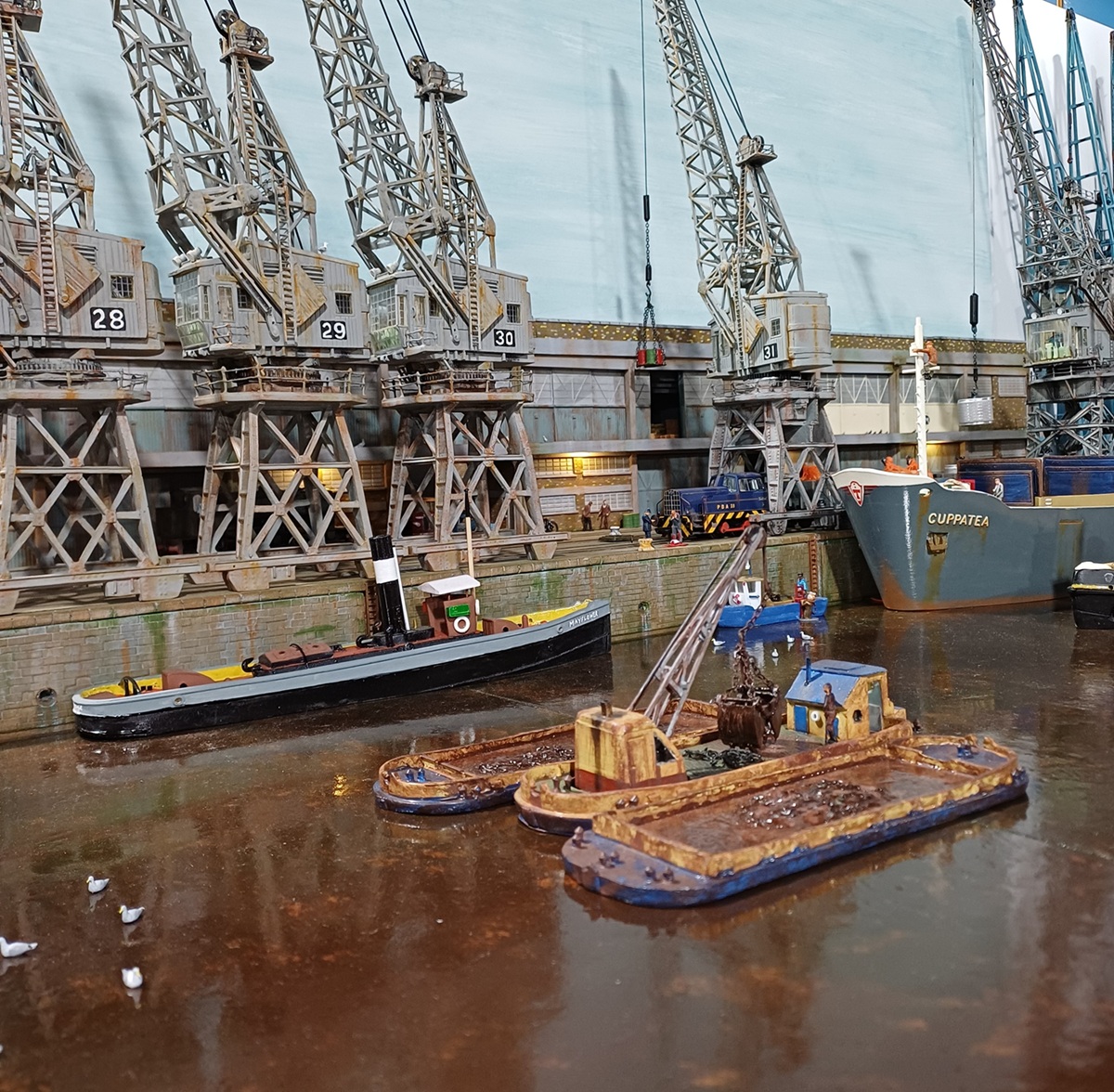
Bristol Harbour OO
This diorama was initially built to display two scratch-built models of the Stothert & Pitt Dockside 3Ton Electric Cranes, located at MShed, Princes Wharf, Bristol.
However, 2020 provided an opportunity to enlarge the diorama, by constructing a few more cranes!
The diorama has evolved and now features seven Stothert & Pitt cranes, six 3Ton cranes and the unique 10Ton crane. Four of the crane models work!
As a museum volunteer and operator of the four surviving cranes located at MShed, I was keen to make an accurate representation. Access to the museum’s archive material was useful, as well as a working knowledge.
The Stothert & Pitt cranes were built at Bath in 1951 and worked at Princes Wharf up until the 1970’s.
There were originally eight cranes located at Princes Wharf, but at the end of commercial shipping in Bristol Harbour, all the cranes were sold for scrap and four were broken up. Fortunately, four of the cranes were bought back from the scrapman, to become part of the then newly formed Bristol Industrial Museum. Over the following years volunteers restored the cranes back to working order and each can still lift to their maximum weights.
People often ask if the model cranes are 3D printed……. they are NOT!!
After studying the drawings careful consideration was given to the various components and a pattern made. Recycled materials were widely used, including plastic milk bottle tops and a Marmite lid!!
With the patterns made, silicon moulds were created, so that repeated copies could be made of the 3Ton cranes. Crane 32 is unique and is therefore completely scratch-built.
Further along the quayside, at Wapping Wharf, there were four Stothert & Pitt DD2 type cranes. This tubular design crane was short lived at Bristol and they were transported down the River Avon and used at Avonmouth Docks. Some DD2’s are still evident in the London and Chatham areas.
Using the same technique of making a pattern from recycled materials has resulted in me making DD2 models.
Bulldog Quay EM
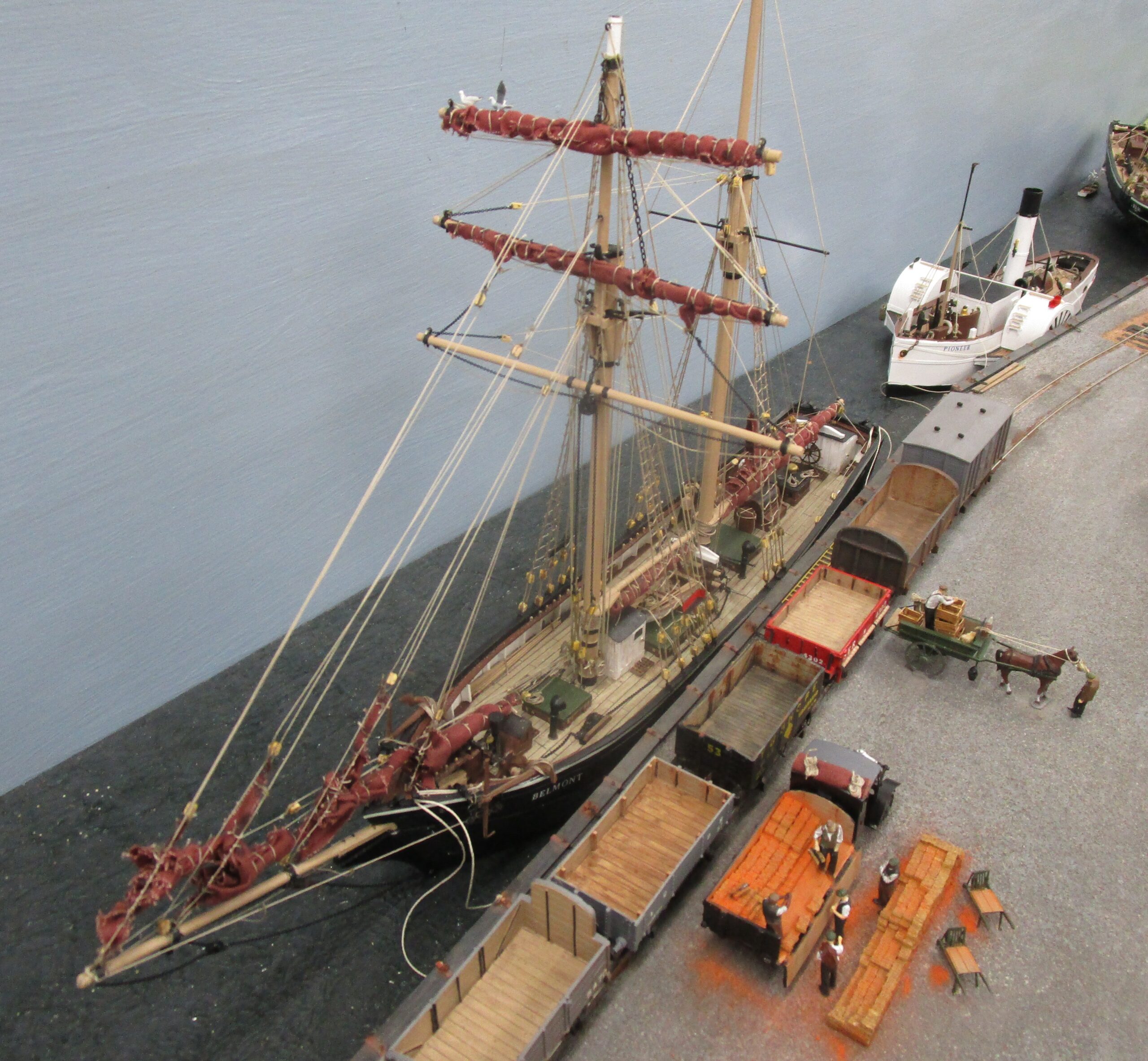
Bulldog Quay was situated on the north bank of Oare Creek, near Faversham, Kent. The line opened around 1895, the tramway served a gravel/flint pit and a brickworks. The line may have been horse drawn narrow gauge, it was out of use by 1916 when a gunpowder works was built in the former pit and the Faversham Light Railway, known as the Davington Light Railway occupied part of the track bed.
My model is scale size built to 1/76, 4mm/1foot scale, EM gauge, I have assumed it was standard gauge and somehow has been connected to the SECR, I have drawn inspiration from other quays, wharfs and docks, in the area, the Rye Harbour branch and the Smeed Dean brick siding at Merston.
Burdock N
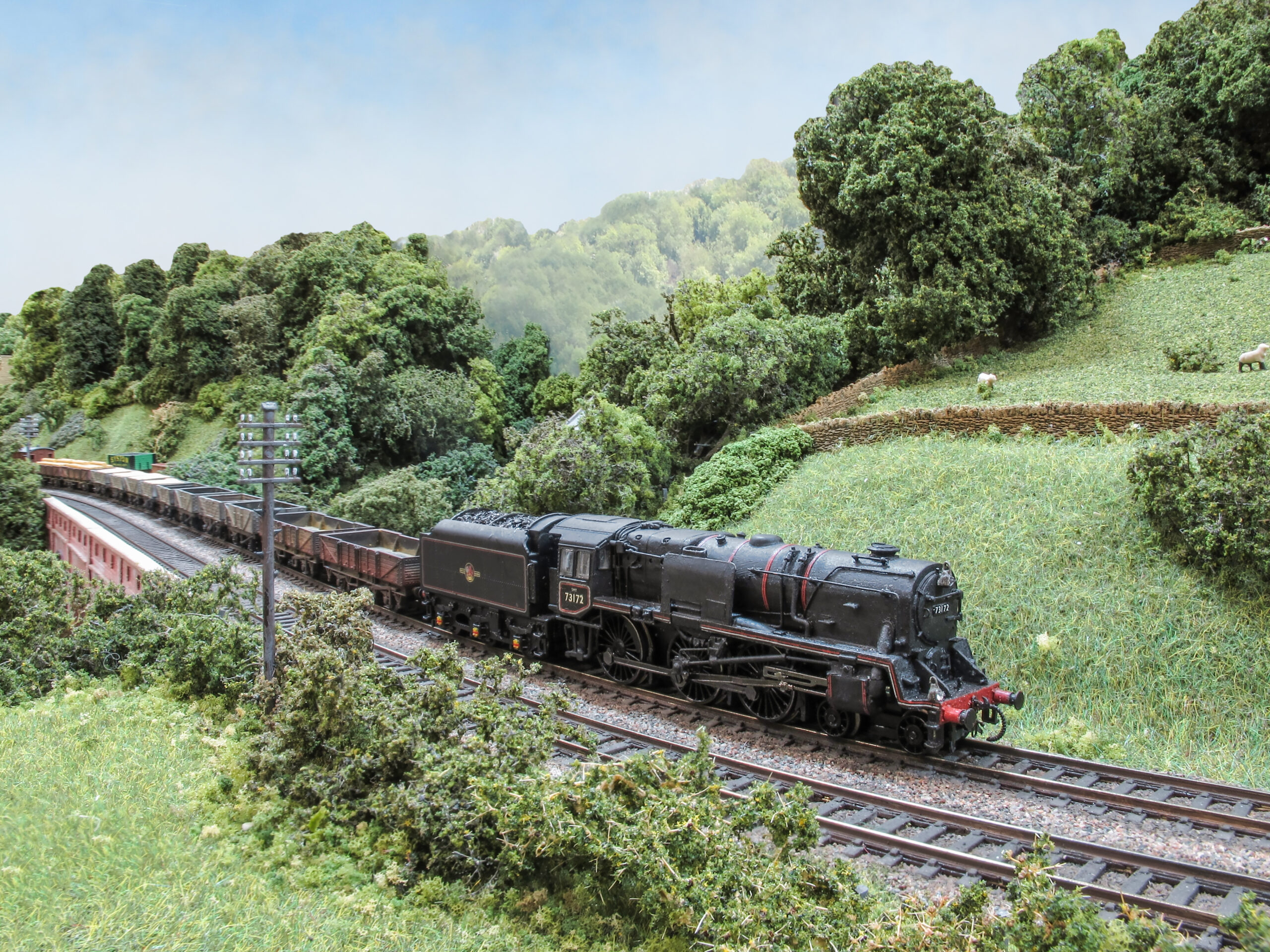
Burdock is a fictional village supposedly along the Golden Valley line between Swindon and Stroud. The name is borrowed from Cider With Rosie by Laurie Lee, which was set not far away in the Slad Valley. Burdock was Rosie’s surname. The station is not based on anywhere specific but I hope it conveys something of the flavour of this picturesque line. The imaginary history supposes that the station began life as a halt, but following demands locally for better facilities, a new station was built at the same time as the conversion from broad gauge in 1872.
Nothing much changed in the intervening years until we reach the period depicted, summer 1964, just a few months before most the stations along the line were closed. The layout is a 12ft x 3ft “roundy roundy” with a fiddle yard that holds 16 scale length trains. The viewing side features the station set in a steep wooded valley with hundreds (literally) of hand made trees. Traffic is typical of that which would be seen at that time, although various prototype, experimental or proposed locomotives will also feature, many scratch built.
Buxton 2mmFS
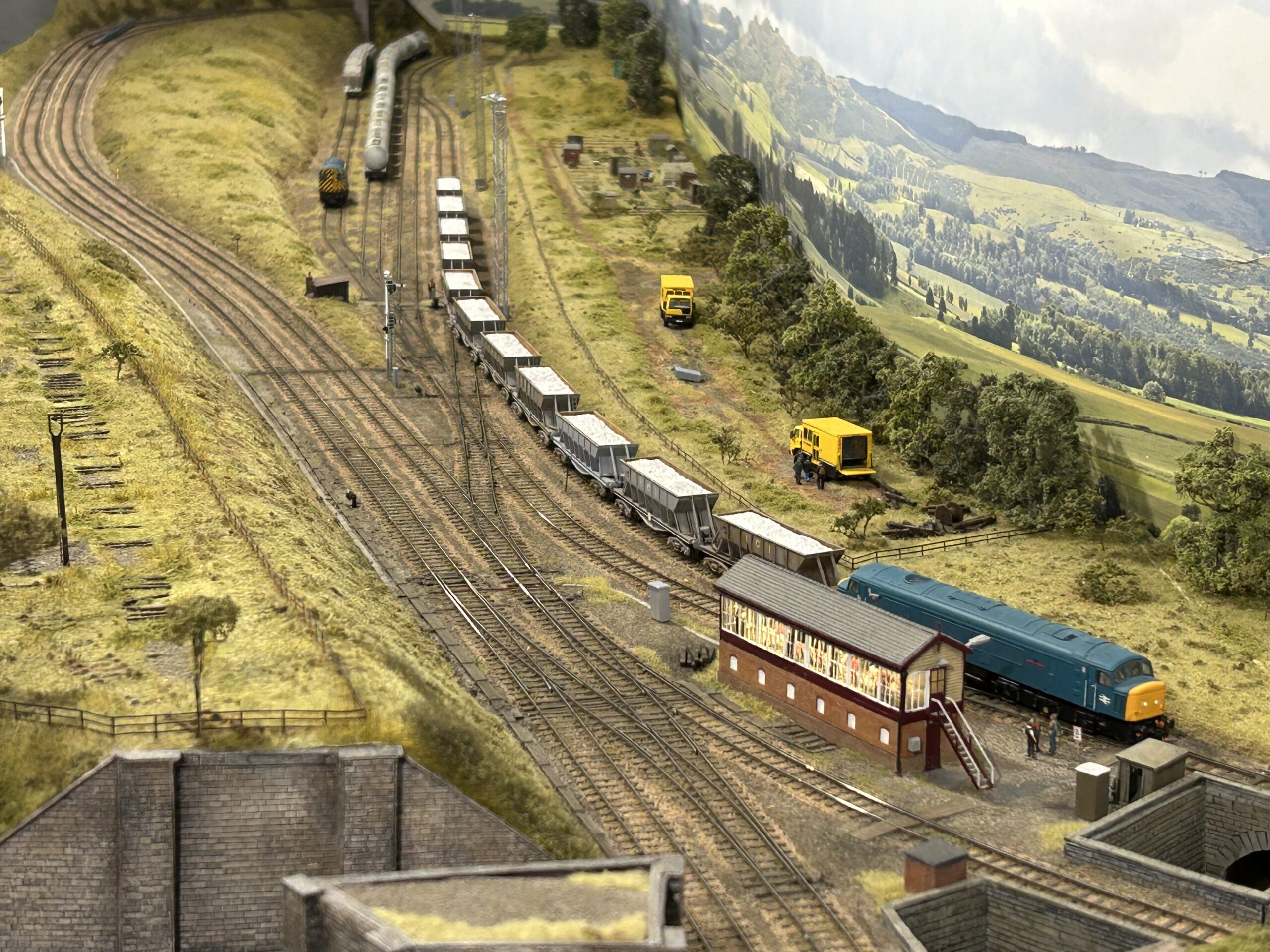
The layout is loosely based on Buxton station and yard in Derbyshire around the 1970/80s. The track is built to 2mm finescale and stock is a mixture of modified ready to run, kit built and scratch built. The two track passenger line to Manchester is serviced by dmu’s with the odd merrymaker tour and parcels train. One freight only branch line is from Peak Forest and the Hope Valley whilst the other spur goes towards Hindlow quarry. Locomotives from the stone trains are serviced at the depot between duties. The wagons and locos used are as close as possible to those found around the Peak District at that time.
Clyre Valley OO9
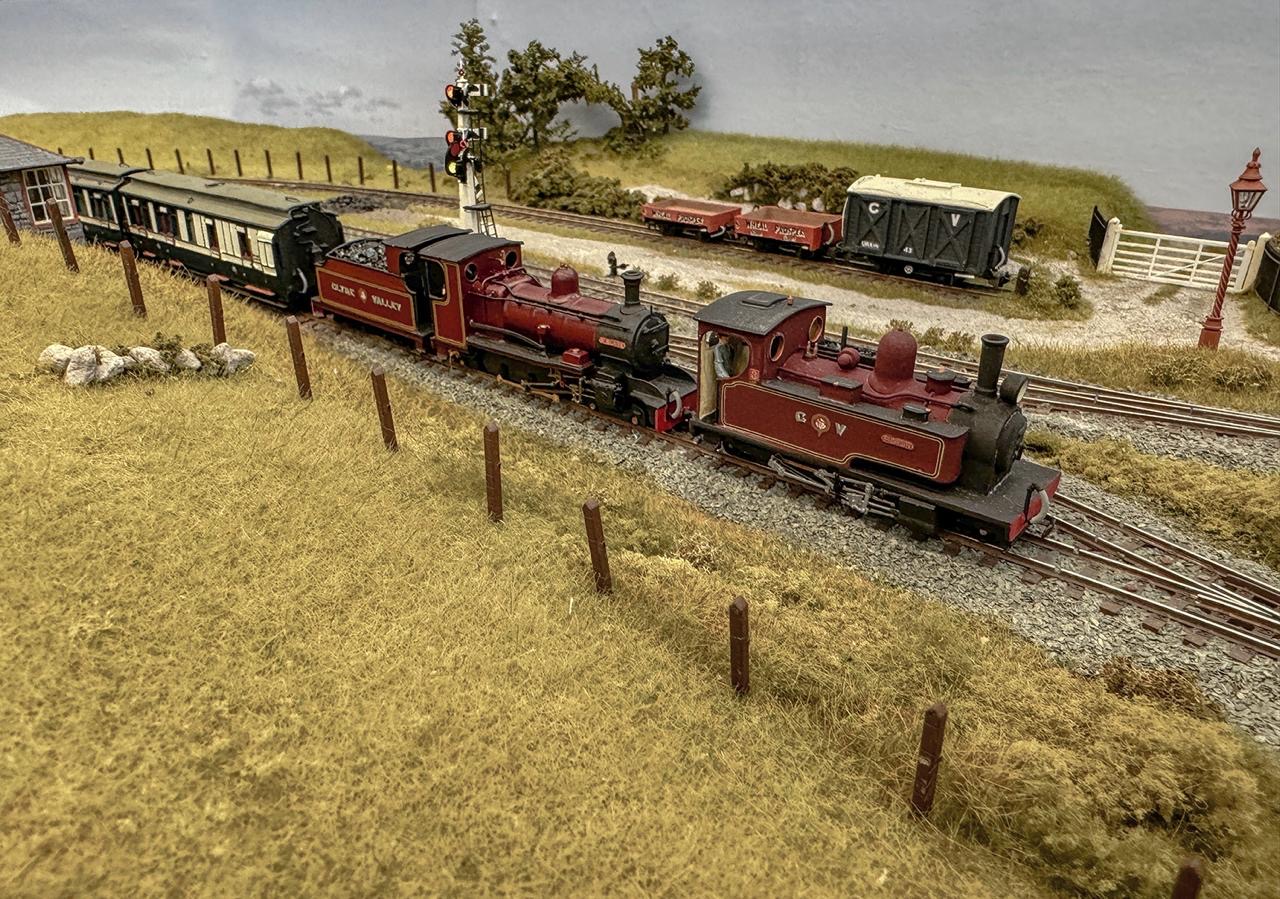
The layout represents a 2’6” main line narrow gauge railway, not in the first flush of youth, but well maintained and capable of handling heavy traffic. Set in Cornwall, the railway runs between Port St George (aka Padstow) and Bodmin and handles significant China Clay traffic as well as passengers and general goods. The section modelled is the area between Wadebridge and Bodmin. Starting at St Breock, just outside Wadebridge, the line leaves the river valley climbing to a remote moorland junction at Buckland Newton. Heavy freight trains are banked up the gradient to the junction where the branch to Blissland Abbey diverges from the main line to Bodmin.
This is a “might have been” railway – exploring a “what if” some standard gauge secondary lines in mainland UK had been built to narrow gauge. These would most likely be in the more remote corners of the country and in many respects the concept is more reminiscent of the 3ft gauge lines of Ireland, such as the Cork, Blackrock & Passage, Lough Swilly or County Donegal. Other inspiration comes from the Welshpool and Llanfair Railway (2’6” gauge). The stock and infrastructure reflect this “larger” narrow gauge outline.
The layout is DC and stock is kit-bashed or scratch-built. The operators will be more than happy to discuss any aspect of the model. More information is displayed on the information boards in front of the layout and on the fiddle yard panels.
The layout appeared in the Railway Modeller in April and May 2020 and in the BRM Spring 2026 issue.
De Tenderloc Uden HO
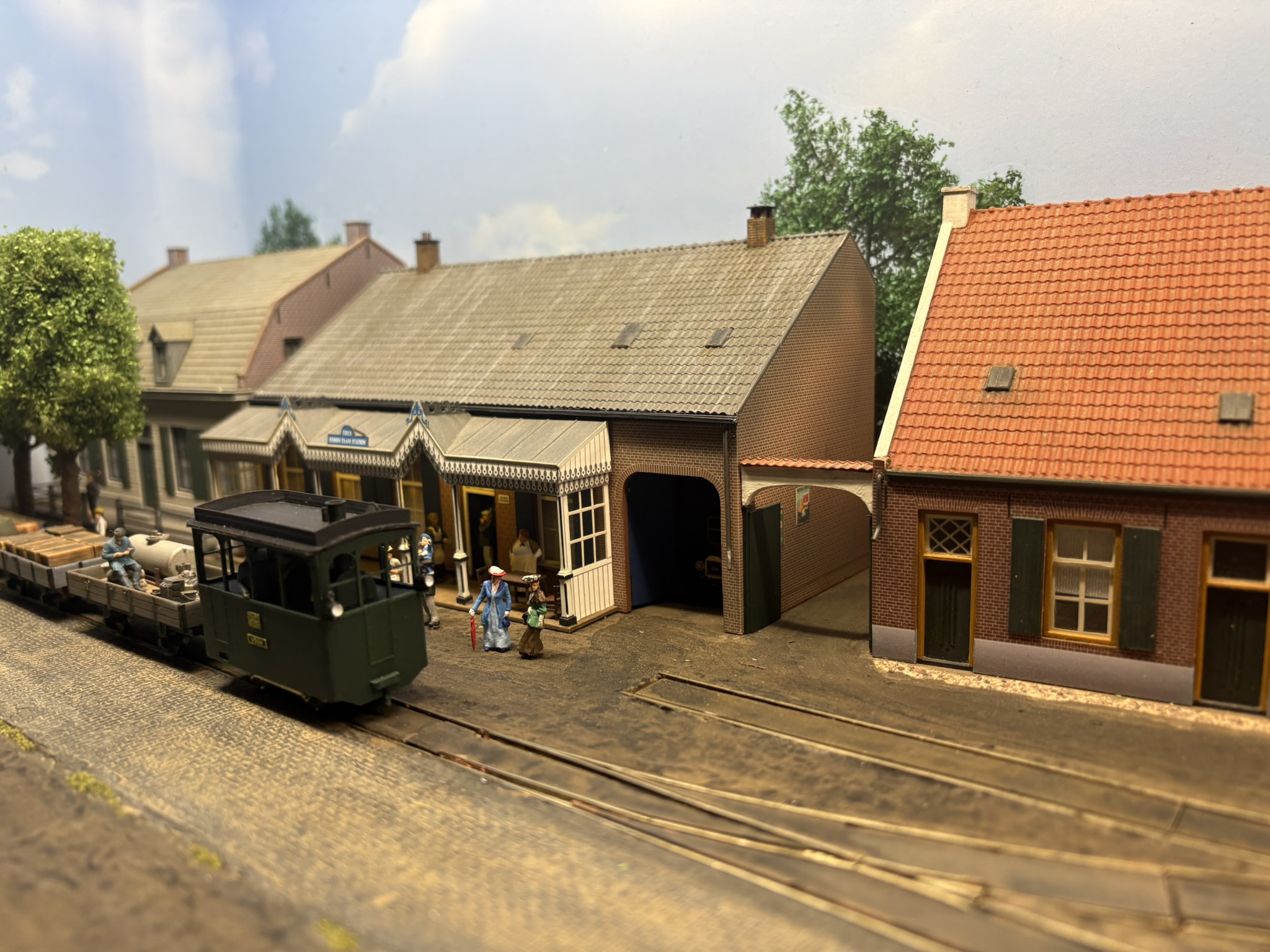
Making the trip to the UK from its home in The Netherlands, this H0 scale diorama displays a lively scene in the Sint-Jansstraat in Uden around 1910. It provides a wonderful glimpse of what tram transport looked like in the south of the Netherlands at the time.
What makes this model layout particularly special are the custom-built trams and railcars, as well as the many moving figures and objects. With great care and technical creativity, every house has been recreated based on historical photographs. More than 10 moving parts are unique and entirely designed and built in-house. A few highlights featured on the layout include:
• Cyclist
• Cat on the windowsill
• Dancing shutters
• Two-horse team with fire pump
• Village pump
• Cattle weigh station
More details and an extensive presentation of the layout can be found on our website: https://detenderlocuden.nl/trambaan/
Dounreay HO
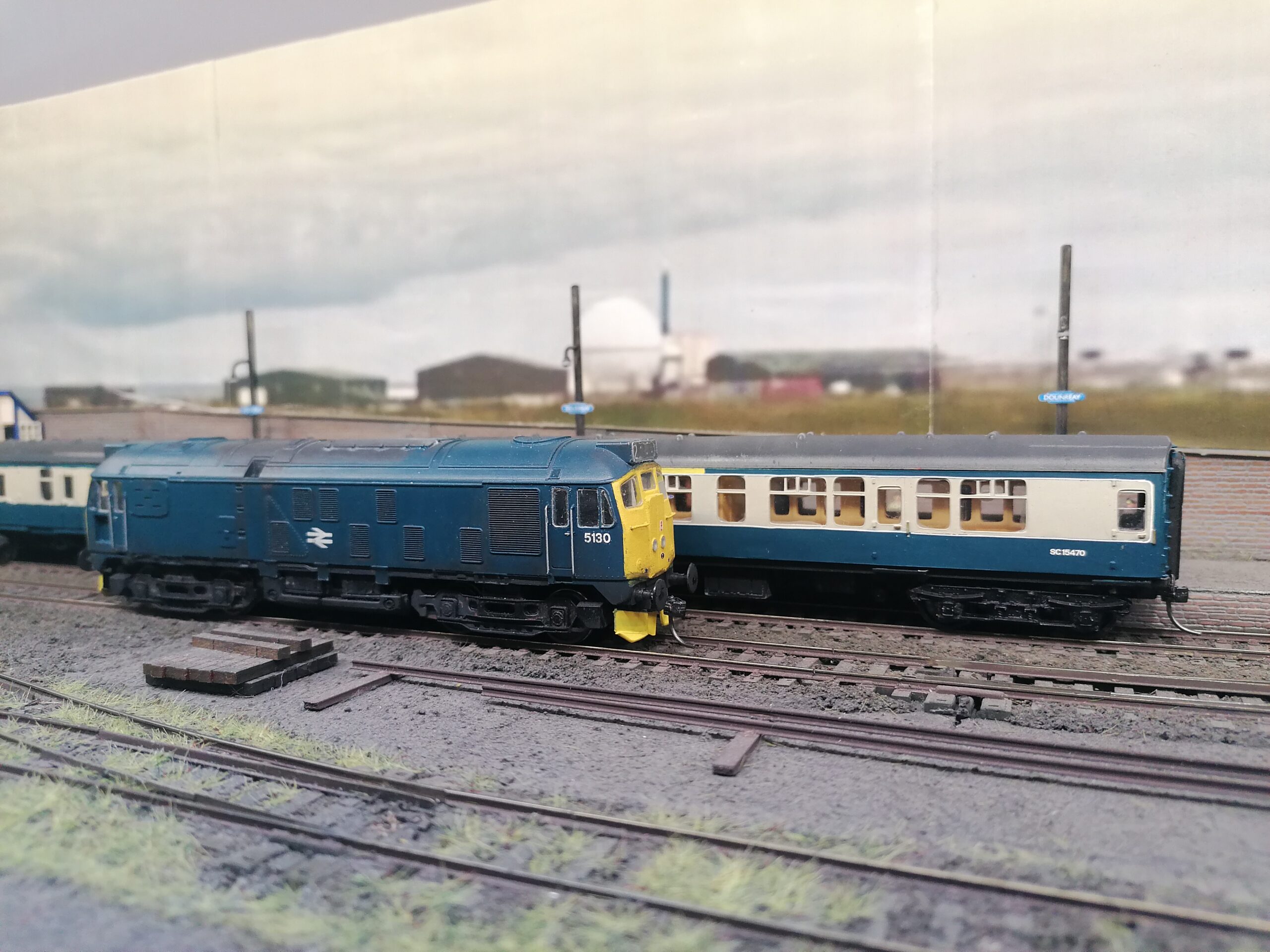
Dounreay is a fictional (but plausible) branch on the Far North of Scotland line built at the turn of the 20th Century to serve the fishing village of Dounreay and retained for the civil and naval nuclear facilities built on the wartime RAF Dounreay airfield.
Inspired by Ken Gibbons’ micro layout Port Pennan, Dounreay is built on an Ikea Lack shelf, with Peco Code 75 track and largely scratch-built structures and details. The era modelled is 1968-1972, featuring green or blue BRCW and Derby Type 2 diesel locos, maroon and blue/grey coaching Mk1 stock and grey or bauxite freight stock.
Modelling in the niche H0 scale means much of the stock is scratch-built, adapted from old Lima and Playcraft H0 RTR models, plus some 3D-printed items. Please do ask questions about the layout and British H0 scale modelling or browse through the reference folder.
Dounreay is featured in the March 2025 issue of Railway Modeller.
Edgworth OO
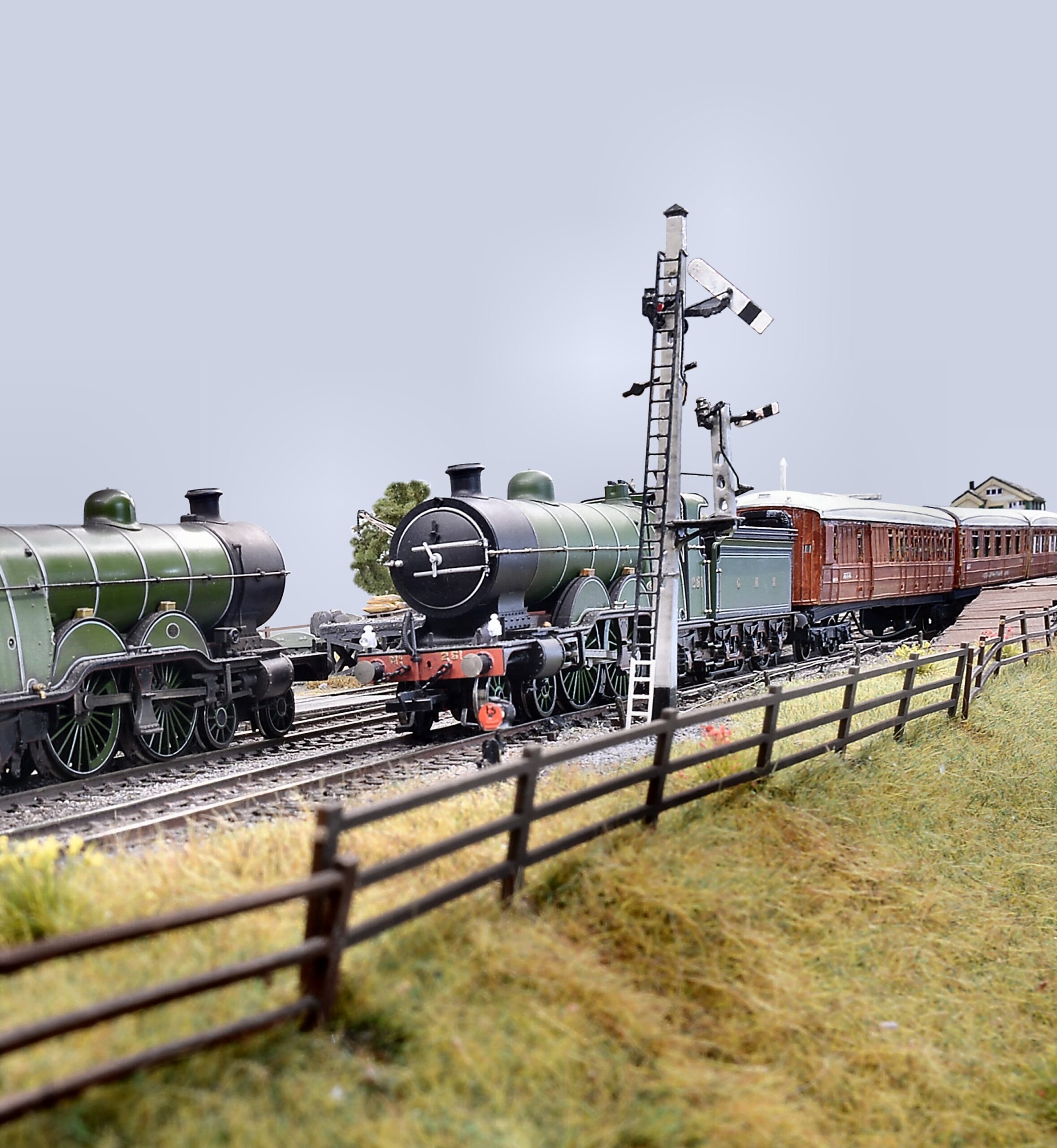
Finsbury Park Depot OO
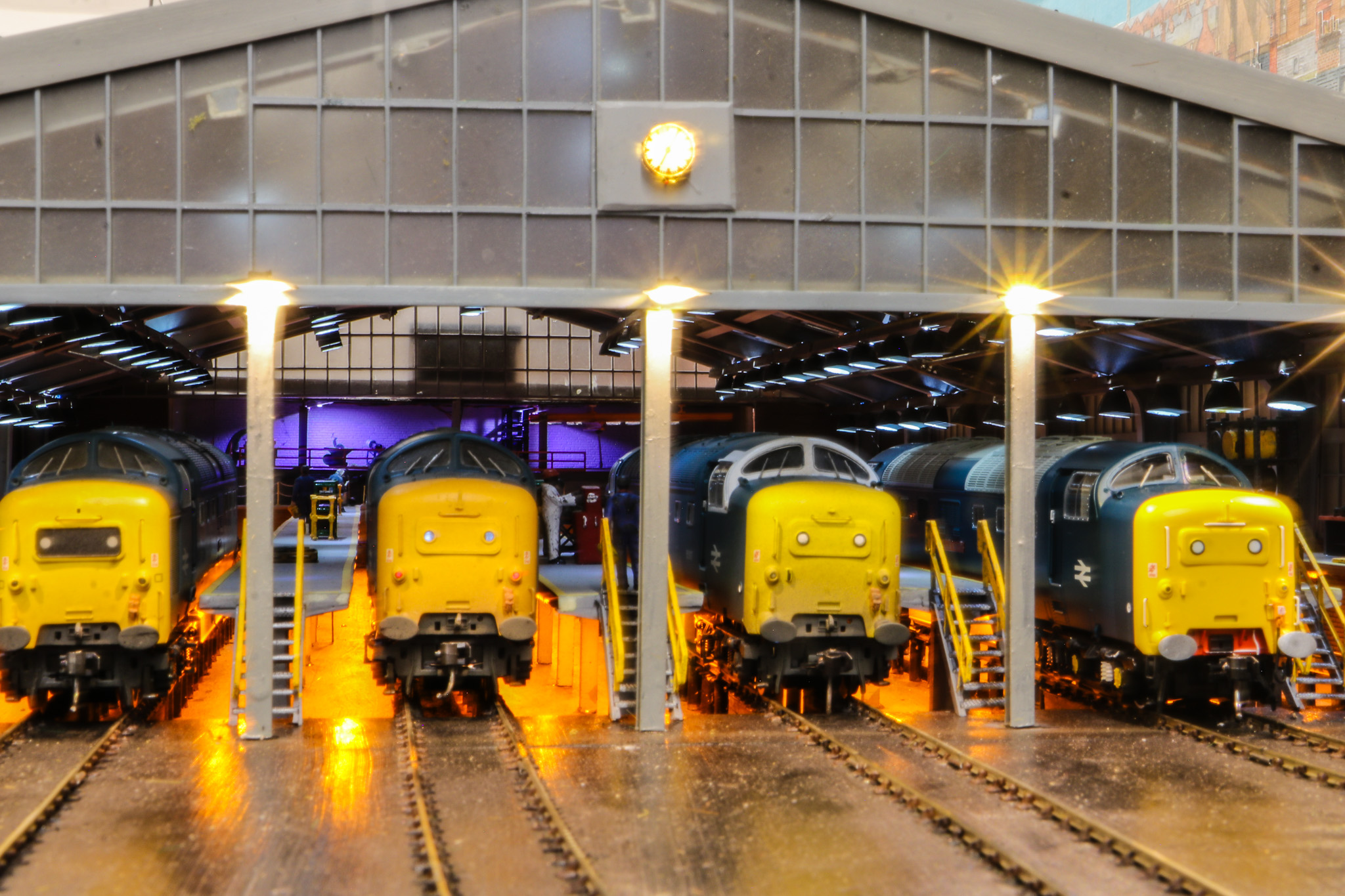
Finsbury Park Road is loosely based on a combination of Finsbury Park TMD and a main line station with through lines.
Finsbury Park TMD was a railway Traction Maintenance Depot situated in London, England. It was the first purpose built main line diesel locomotive depot opened in this country and it was fully commissioned in April 1960 and closed in October 1983. Finsbury Park was a steam shed under British Railways with the depot code 34G; the depot code of the diesel depot under BR was FP. Our layout focuses on the shed and the lines leading up to the shed in the BR Blue Tops era. Also, we were able to obtain original drawings from Railtrack and have used these to capture the feel of the shed.
Construction of the shed is used several techniques to produces the features that these sheds had, which made them efficient to services the developing diesel fleet for BR.
At the front of the layout is the main line station together with occupied arches, car garage, houses and a power station. Together with the backscenes is to capture the look of a North London Area.
Any question then feel free to ask one of the operators.
Five Mile House OO
The original Five Mile House is an Inn used by the ‘bargees’ during the days of the horse-drawn packets, which gave the station its name. It was sighted on the south side of the Witham.
The view is a representation of the station circa 1935. You are standing on the Fiskerton (north) side of the river Witham on the site of the current bridge, looking south.
In the foreground is the river Witham. Behind is the Station itself and beyond that the South delph.
The only building is the signal box, rebuilt after a fire in about 1919, which would operate the points, signals and crossing gates.
For the villagers to get to Fiskerton station they would have to use the chain driven ferry across the Witham.
Rolling Stock: The Locomotive stock is LNER in nature with ex GNR and ex GCR, most are RTR propriety with the addition of some kit built examples.
We run a mixture of trains from Fish Trains from Boston to Coal Trains from the Yorkshire Coal Fields. We also run a variety of passenger trains, again most are kit built including twins, triplets and quads. This includes everyday stoppers, to express trains which have been diverted to the Lincolnshire Loop from the ECML.
Harefield Road OO
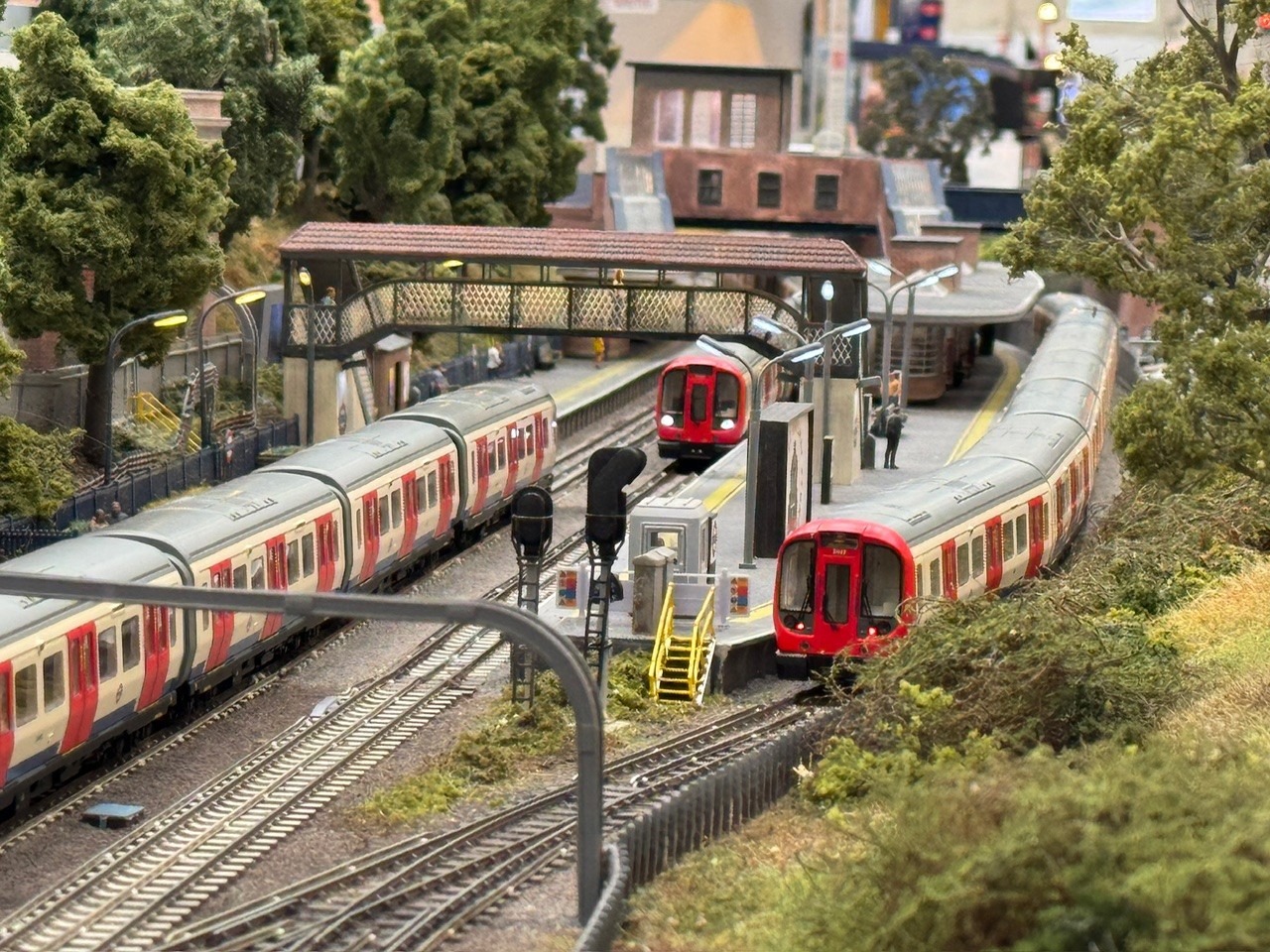
'Harefield Road' is a OO gauge DCC railway primarily based on the outskirts of the London Undergrounds Metropolitan Line built by Eric French.
The layout is generally a post 2010 modern theme, but features a huge variety of Underground stock from throughout the past and present, including the Steam on the Met specials and freight/passenger stock that can be found on the nearby Chiltern lines for some variety.
For only the second time, the full 40ft long layout will be exhibited to the public, adding on the branch line to Harefield West, Croxley Hall depot in between and a working roadway with self driving lorries & RC cars in use to add to the fun.
Japan In Bloom N
Karolina Falls HO
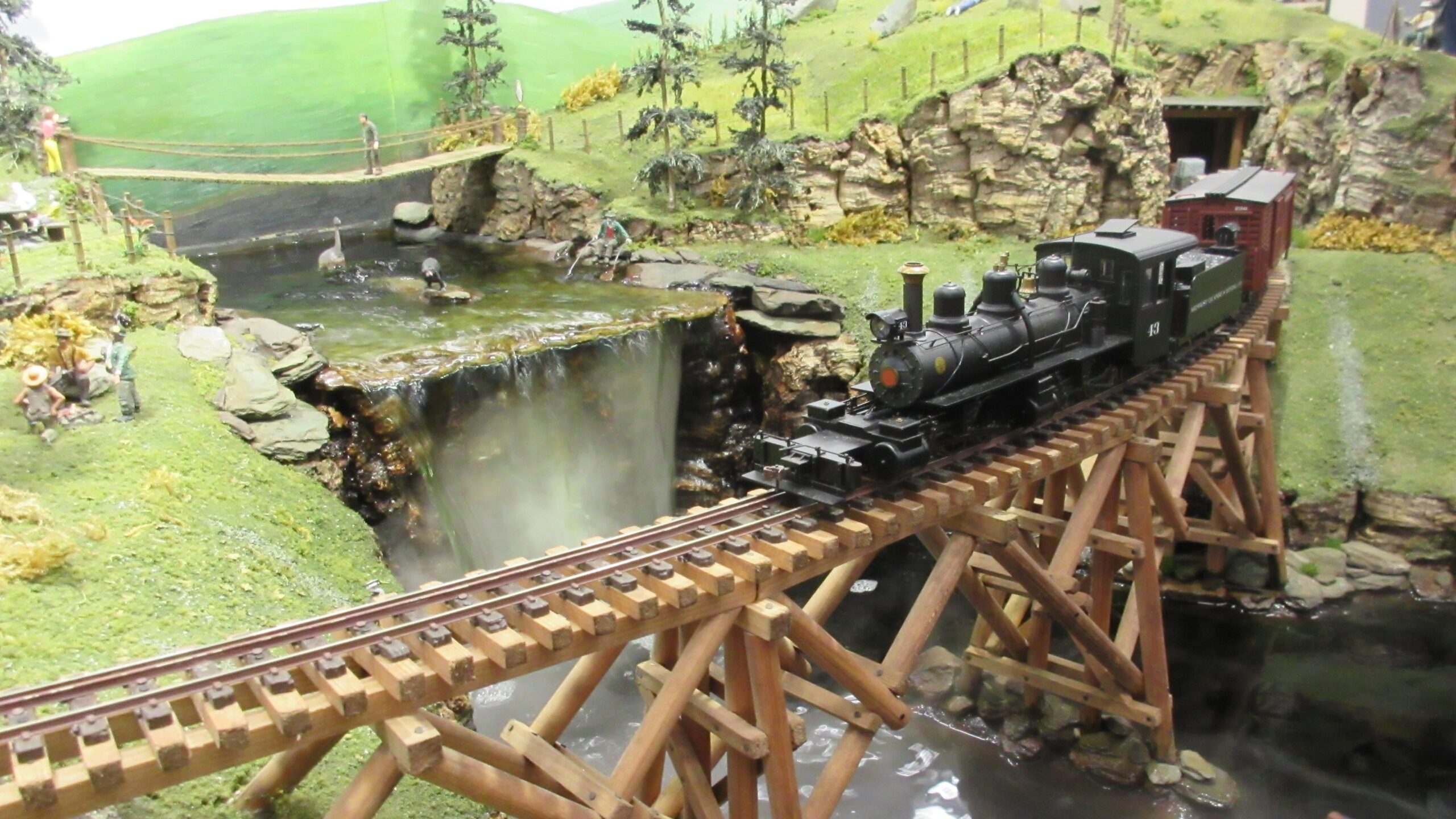
A gold prospector discovered the falls in the mid 1800s and named them after his wife "Karolina" .He carried on with his long quest for gold and found a rich seam .He persuaded investors to build the railway which bridged the ravine in front of the falls. The gold soon ran out, so then he turned to logging to keep the investors happy.
With logging trains passing the falls every day people got to hear about the falls, so he decided at weekends to attach a carriage to back of some trains and started taking visitors to the falls. To cope with demand he took a gamble and built the station shortly followed by the saloon and general store. Logging and tourism were running hand in hand .Business was good so he built a bank, paid off the investors and made himself sheriff.
Moving forward 100 or so years its now the late 70’s . With the discovery of a new vein of gold the mine has reopened. The railway is now a preserved line still owned by the original family .Nothing much else has changed , there are a lot more tourists including the odd teddy boy and punk rocker and still the odd logging train trundles past.
Karolina features a real waterfall 2000/lph cascading into the ravine below. The layout is a basic oval on four boards with a passing loop in the station area and a 5 track traverser in the fiddle yard .Track used is Peco with Seep and Gaugemaster electrics .Water and electric don’t mix but I didn’t read the memo !
Karolina Falls was built in 2012 in 10 months (layouts are never finished) and was exhibited at its 1st exhibition the same one as my last layout Avyn a llyin 23 years earlier . Karolina falls appeared in Sept 2014 Continental Railway Modeller with an 8 page spread .I hope you like what you see and feel free to ask any questions about the layout ,we might even be able to answer them !
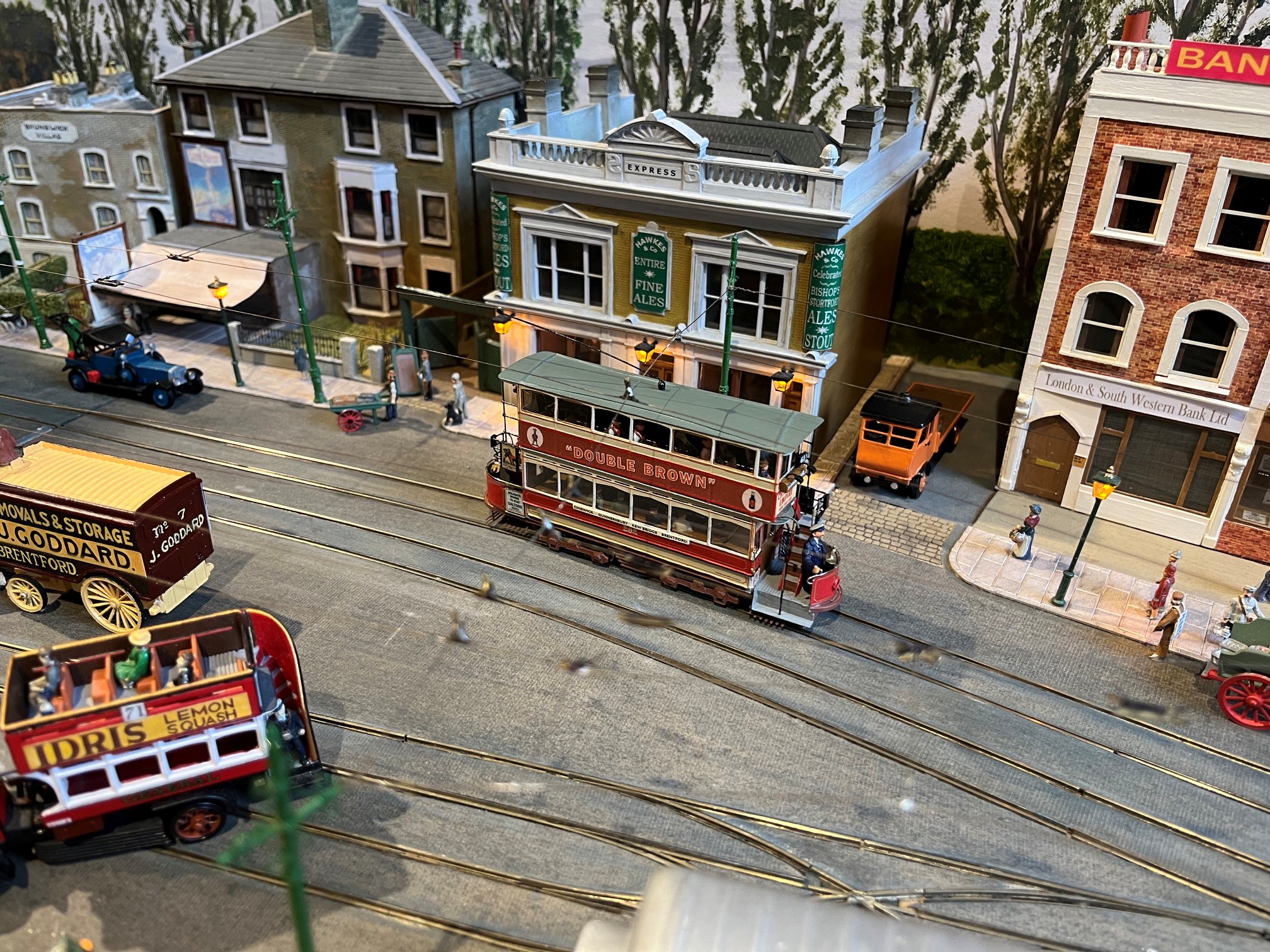
Kew Bridge OO
The Kew Bridge layout in OO scale, depicts an actual location to the north of the bridge in Brentford set in the period between 1901 & 1935 when electric trams were to be seen there. The buildings are all recreations of actual ones that still exist today along Kew Bridge Road and feature the Kew Bridge railway station, shops, the Express pub and terraces, along to The Metropolitan Waterworks (now The London Museum of Water & Steam, where the layout was built and is still stored some 25 years later).
There are two separate tram tracks in the roadway allowing trams to travel east and west complete with overhead wiring for trolley pole operation. Trams running represent the various styles of London United cars over the three decades of operation unto the early days of London Transport in the area. Normally six or seven tram cars can be seen on the front of the layout at any one time.
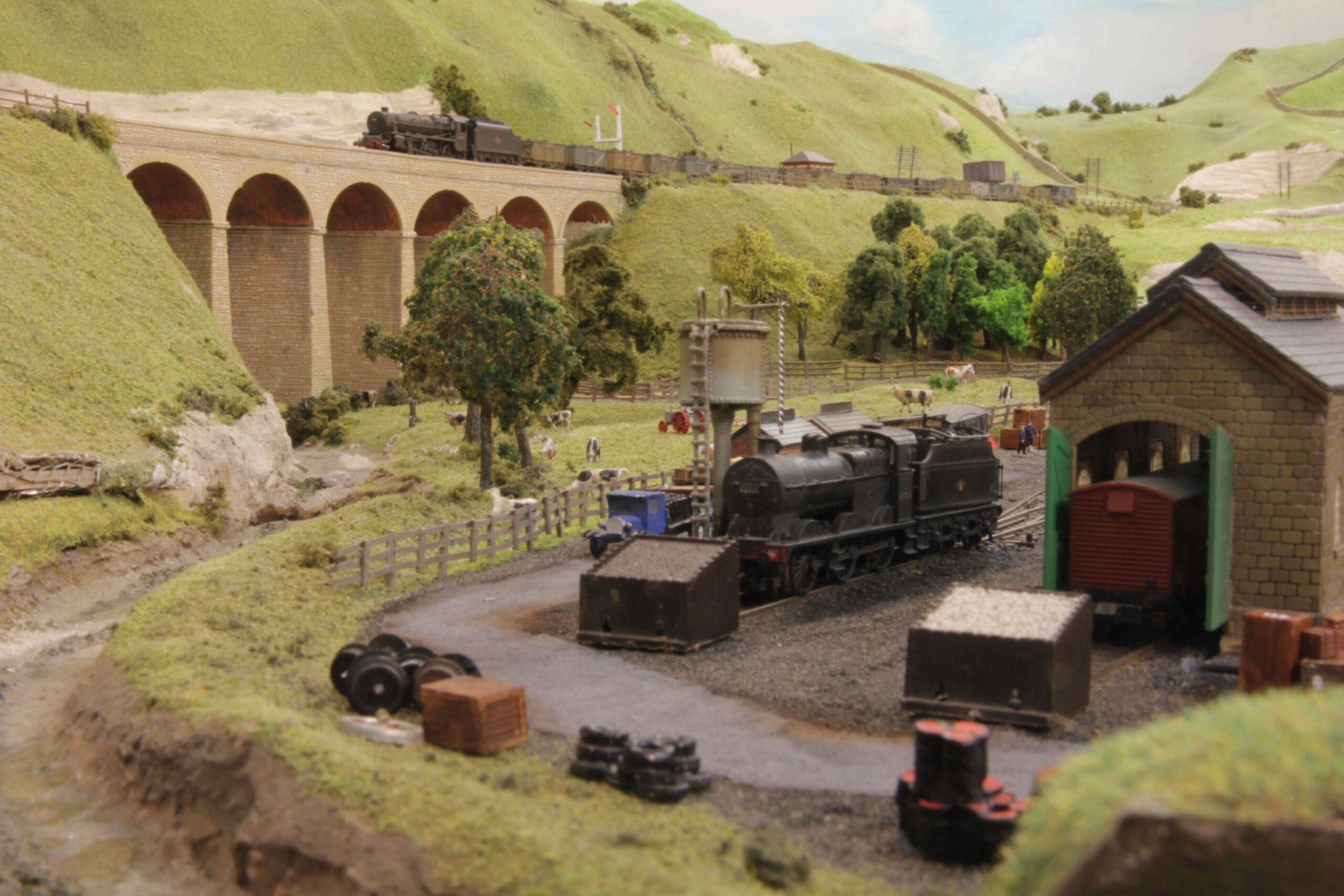
Lacey Dale N
A recreation of the LMS mainline running through the Monsal Dale and over Headstone viaduct during 1960s Derbyshire just North of Bakewell. The layout includes an upper level loop with 16 trains under automatic computer control showcasing a variety of mainline stock, highlights include the both the glamour of the Midland Pullman and full length mineral, milk and oil trains.
The low level is an imagined “what-if” goods yard and small station. This is controlled manually and allows for plenty of goods shunting around the yard and local passenger services in and out of the three platform station.
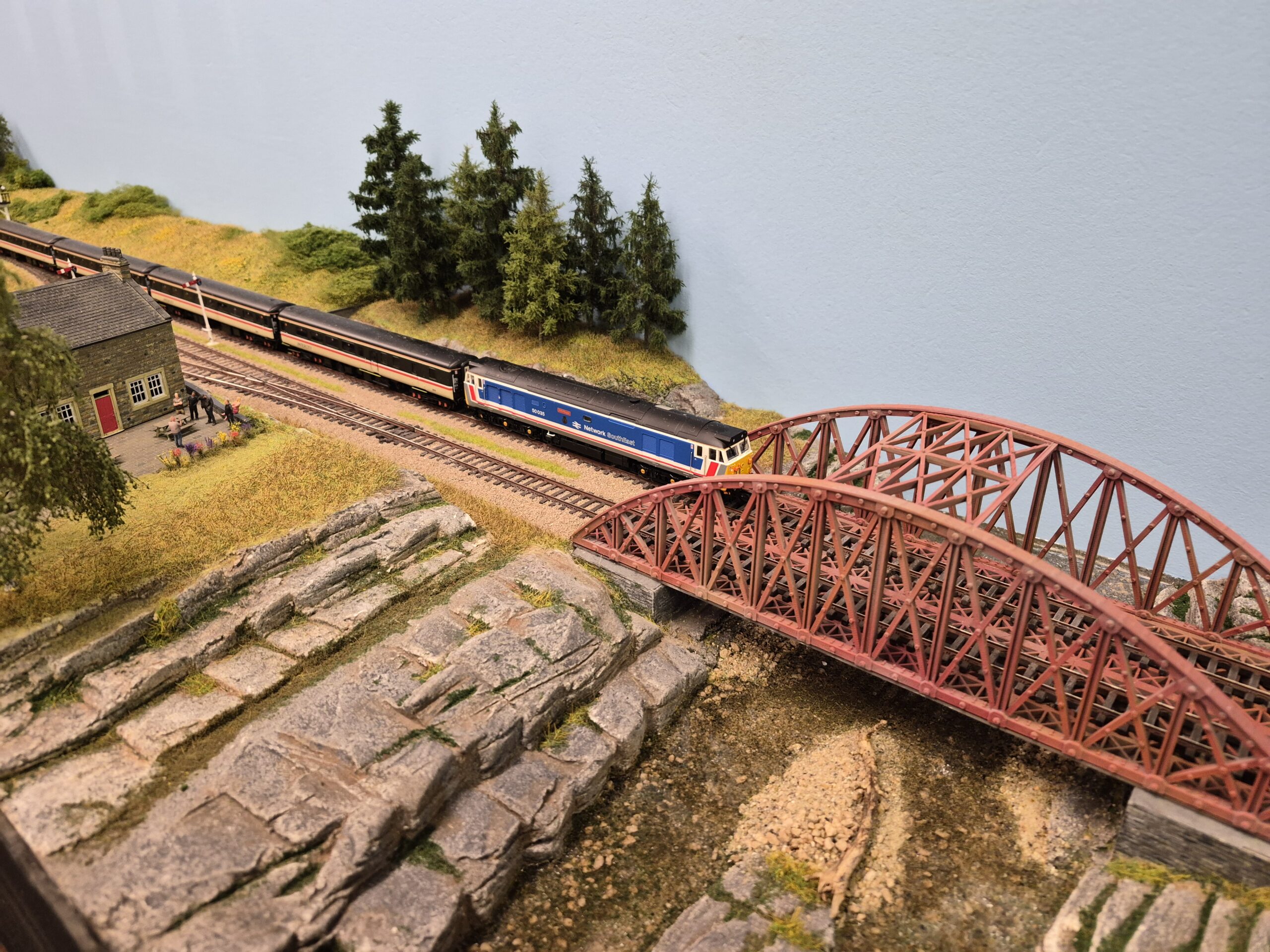
Llanwyddyn TT120
Llanwyddyn is a fictional town set somewhere in Mid Wales during the early 1990s.
The layout takes inspiration from Llwydd Town, originally built by the late George Woodcock around 2004, and has been named Llanwyddyn as it contains all the letters from Llwydd.
The branchline terminus station plays host to a number of Welsh Class 37/4s with various Mk2 stock, as well as local passenger services provided by Class 122 units. The station also receives mail and newspapers via rail.
Opposite the station, the privately owned fuel siding receives fuel deliveries via rail, usually TTAs with a Class 37/4 providing the traction. At the other end of the layout, an engineers siding sees occasional use for storing engineers trains ready for weekend work.
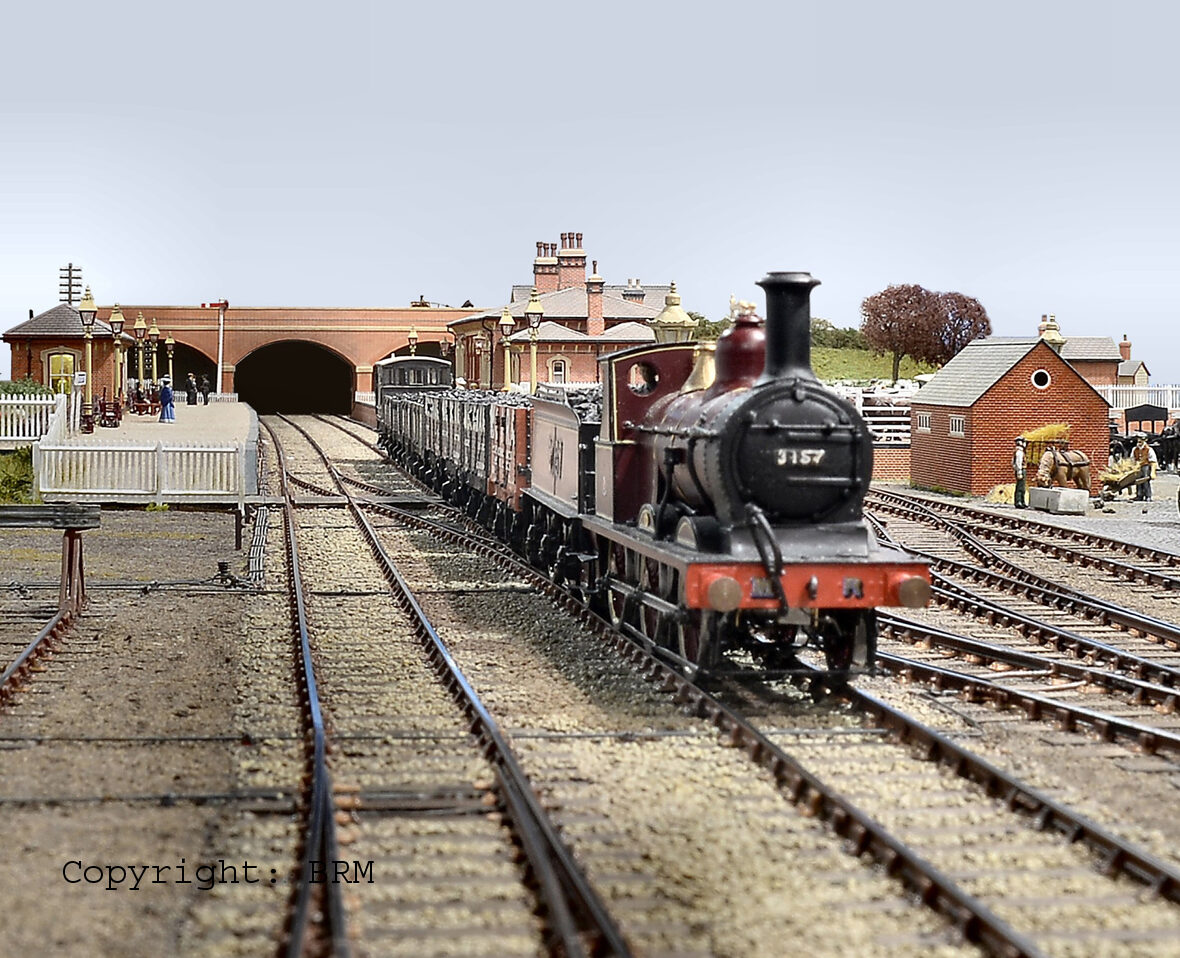
Market Bosworth P4
Market Bosworth railway station was a former stop on the London and North Western Railway and the Midland Railway, who jointly owned and operated the line between Moira West Junction and Nuneaton as the Ashby and Nuneaton Joint Railway. A branch line also existed from Shackerstone to Coalville.
Note that Ashby-de-la-Zouch was not actually on the line but was a stop on the Midland line from Leicester to Burton.
The station was to the west of the town and served all the local farms for both outgoing cattle and incoming provisions and equipment.
The substantial goods shed was the centre for the majority of incoming/outgoing goods traffic for the whole area.
There was a small gas works on the opposite side of Station Road. It was probably supplied coal via the Ashby & Nuneaton canal but one written information source* suggests it was rail fed. Although no evidence of a private siding can be found we have chosen, for operational interest, to assume it was supplied by rail with the station down sidings used for exchange of gas works traffic.
Coal from local collieries was also marshalled at the station for onward shipment South.
The model is a representation of the station and goods yard in the period 1907 to 1909.
All the facilities at the station are represented on the layout including station, station master’s house, coal marshalling sidings, cattle dock, carriage landing, goods shed and up and down sidings.
Operation of the layout is by a sequence of moves that bring together traffic that could have been seen at the station over a period of days.
*Ashby & Nuneaton Joint Railway by Peter Lee
Moors View N
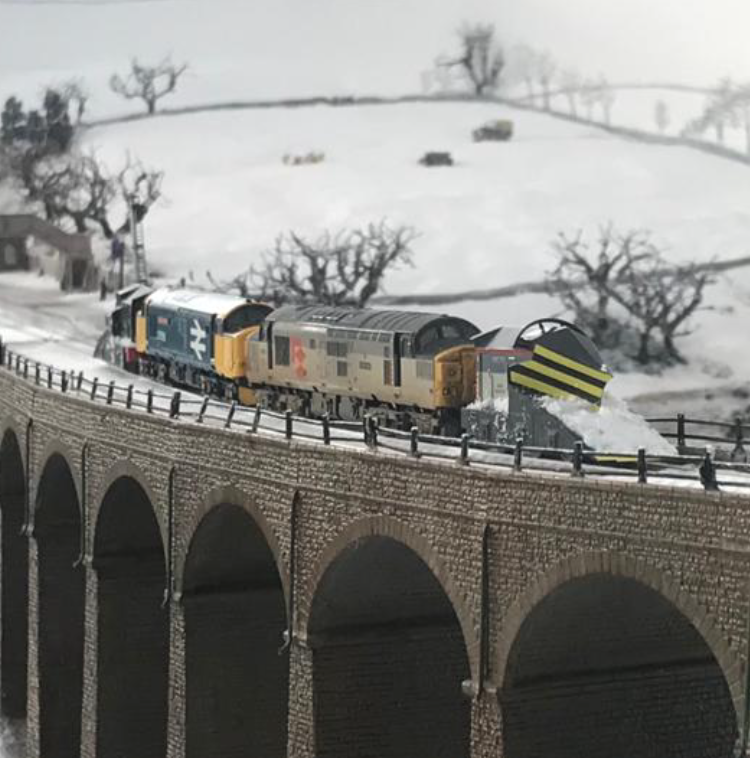
Moors View is an additional station situated on the ex SR mainline that ran between Exeter to Plymouth in Devon & skirts the north & west of Dartmoor.
Set in winter, Devon has be hit hard with storms on the south coast, which has made the ex GWR mainline between Dawlish & Teignmouth impassable.
Dartmoor has been hit with heavy snow fall, but the Pway crews have worked hard to keep the line open, allowing all traffic to travel this route into Plymouth & beyond into Cornwall.
We start on Saturday in 1955 & end in 1968, giving the viewers both prototypical steam & Diesels Hydraulics that worked the route.
On Sunday, we run 1980s stock BR blue to Railfreight greys & NWSE liveries as if the line had never closed, but also using prototypical stock used in the area.
Mothecombe OO
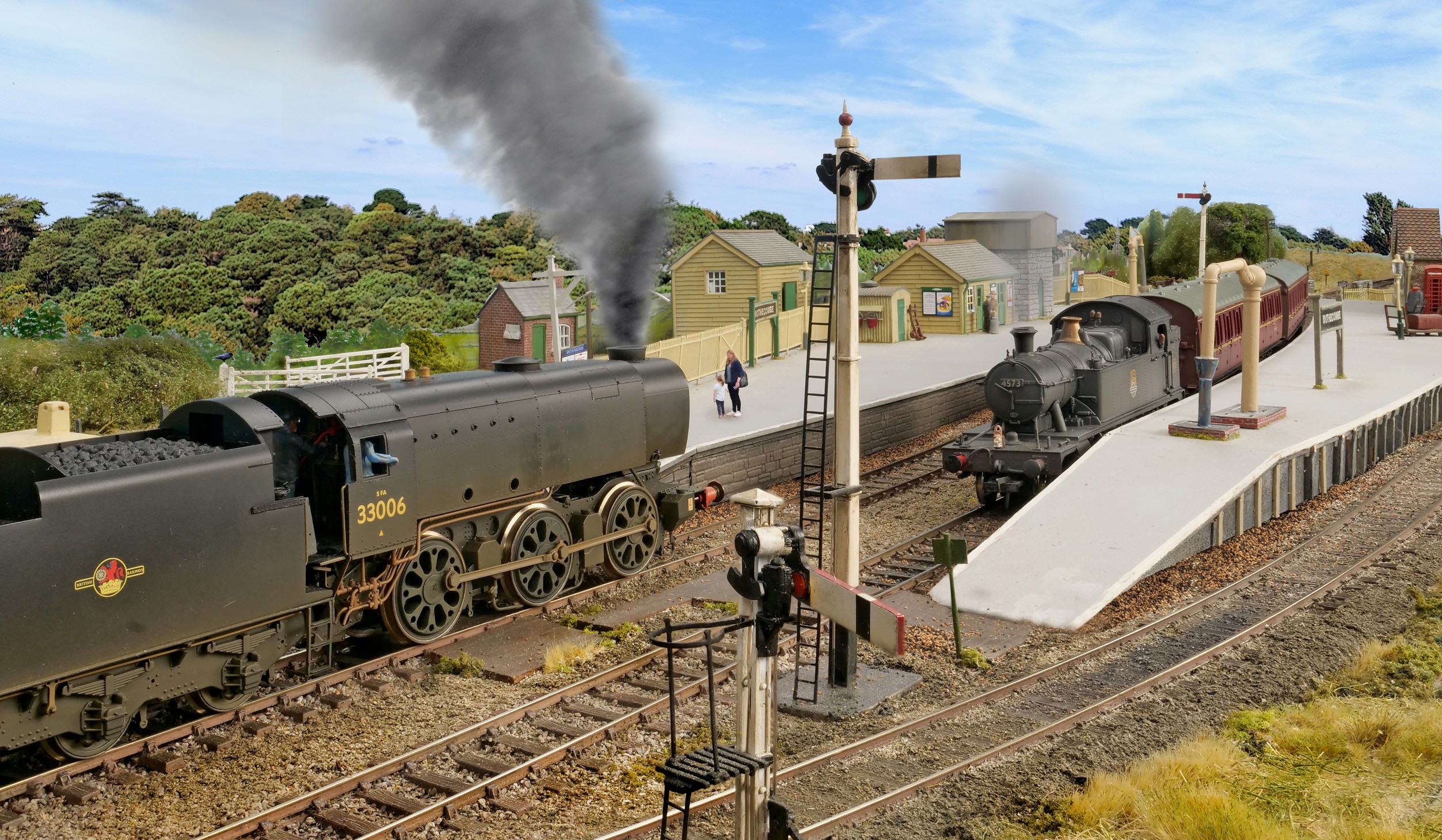
The Junior members of the High Wycombe & District Model Railway Society are pleased to exhibit their layout Mothecombe, a quiet through station on a rural line somewhere in south Devon, close to the coast and Plymouth, and presented in the BR Western and Southern periods. At either end, two fiddle yards feed trains through the layout. A bay platform is provided for the local push-pull service and a small yard serves the local community. Occasional diversions from the main line add interest and some modern interlopers may appear later in the day!
The High Wycombe club has a tradition of encouraging and supporting younger railway enthusiasts and this layout is an example of the level of modelling achieved by a group of our Juniors with the full support and encouragement of our older members. For more information about our Junior section (12-16 years) do speak to us.
Netherwood Sidings O
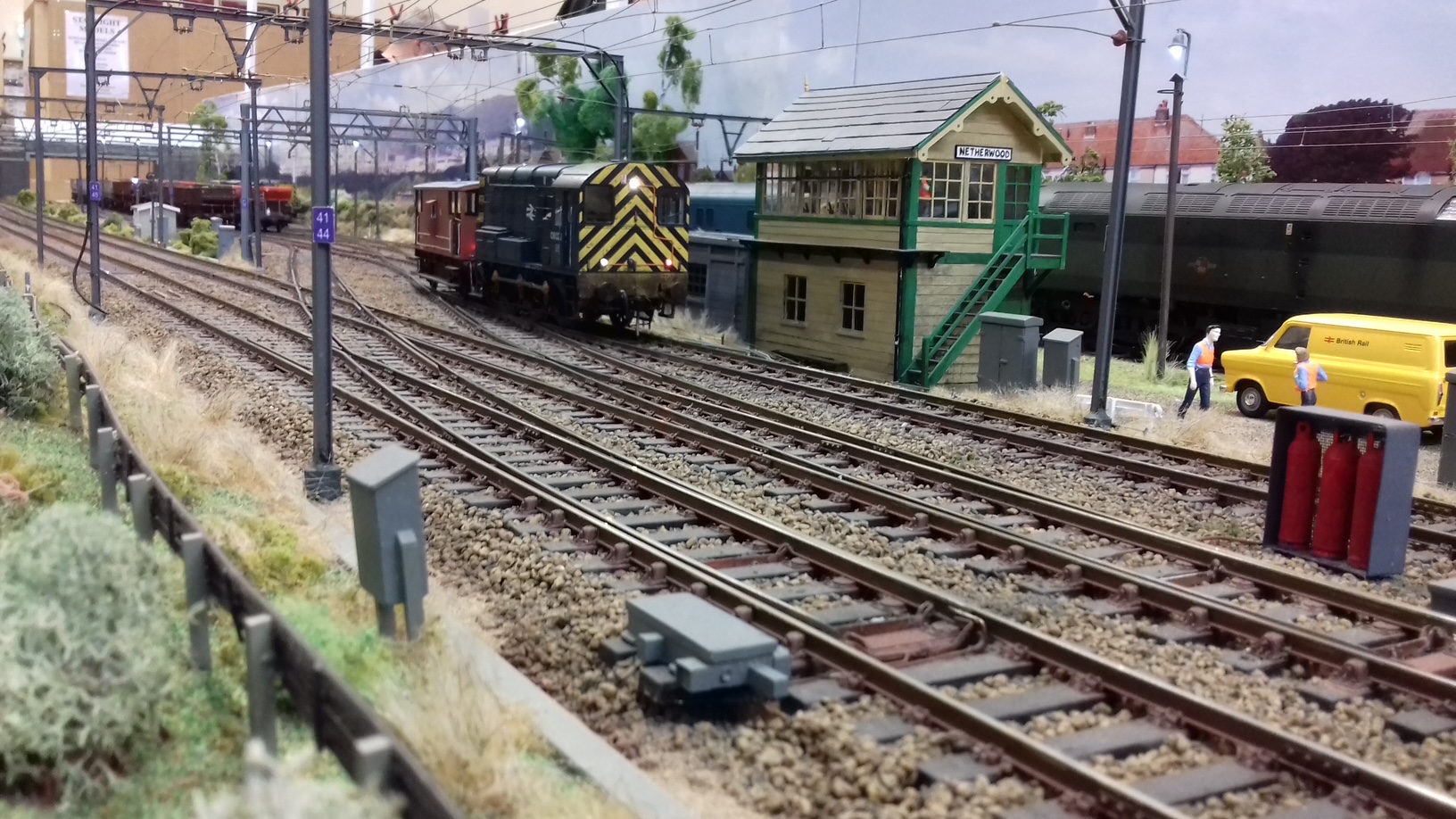
This layout represents the Woodhead line in its final years. The layout is based on a set of exchange sidings near Sheffield. The track plan is freelance but based on features taken from Rotherwood and Wath. The bridges, in particular, are based on the real ones in the Rotherwood-Orgreaves area. The layout has taken around ten years to build and features scale overhead line equipment.
Track is Peco plain line with the pointwork made from Peco Individulay parts. The double junction was built on a 1:43 scale print of the Network Rail drawing of a double junction. Some of the plain line uses Peco individulay parts with plywood or Peco 'concrete' sleepers. Care has been taken to try and make the trackwork as realistic as possible. The stone buildings were made from foamboard covered with 'no more cracks' filler, scribed to represent the stonework. Other buildings are plasticard (signal box) or Ten Commandments (pway hut). The various road vehicles are mainly Corgi.
The overhead wiring is the most obvious feature of the layout and was built from brass sections in the same way as we built the masts on Deepcar. Photographs of typical masts were used, taken from various books, and supplemented by measurements of the size of the steelwork which still exists at the Manchester end of the line. The wiring is to scale and consists of 0.5mm diameter steel piano wire silver soldered together. It is tensioned by small tension springs on the layout, but the real wiring was not. I found it necessary to tension the model wiring as the layout is kept in the loft where the temperature range is much greater than outdoors.
The diesel locos are mainly from various kits, by Post War Prototypes, RJH and Modern Motive Power. There are also some Heljan diesels and a Dapol 08. The 76s were built from my own kits, as described in the series of articles published in Railway Modeller between December 2010 and April 2011. Rolling stock is mainly kit built from Parkside and Slaters kits but there are also some ready to run wagons (Dapol, Skytrex and Bachman) and some scratchbuilt wagons.
The layout is controlled by a MERG DCC unit and all of the diesels have sound decoders and some have home made smoke units. Some of the electric locos have sound and arcing pantograph effects. The chip shop has a 'working' deep fryer (actually a Suethe smoke unit in the chimney) and can be operated by visitors pressing a button on the front of the layout, as can the chimes in the ice cream van and the flashing light on the police phone box.
Norman Colliery O
The imaginary colliery is set in the South Yorkshire area and is at the end of its working life with the remains of workings being removed by various ex BR and industrial kit built locomotives. All the buildings are scratch built copying pictures from various books. The freight stock is kit built except the fuel tanker.
Penworth N
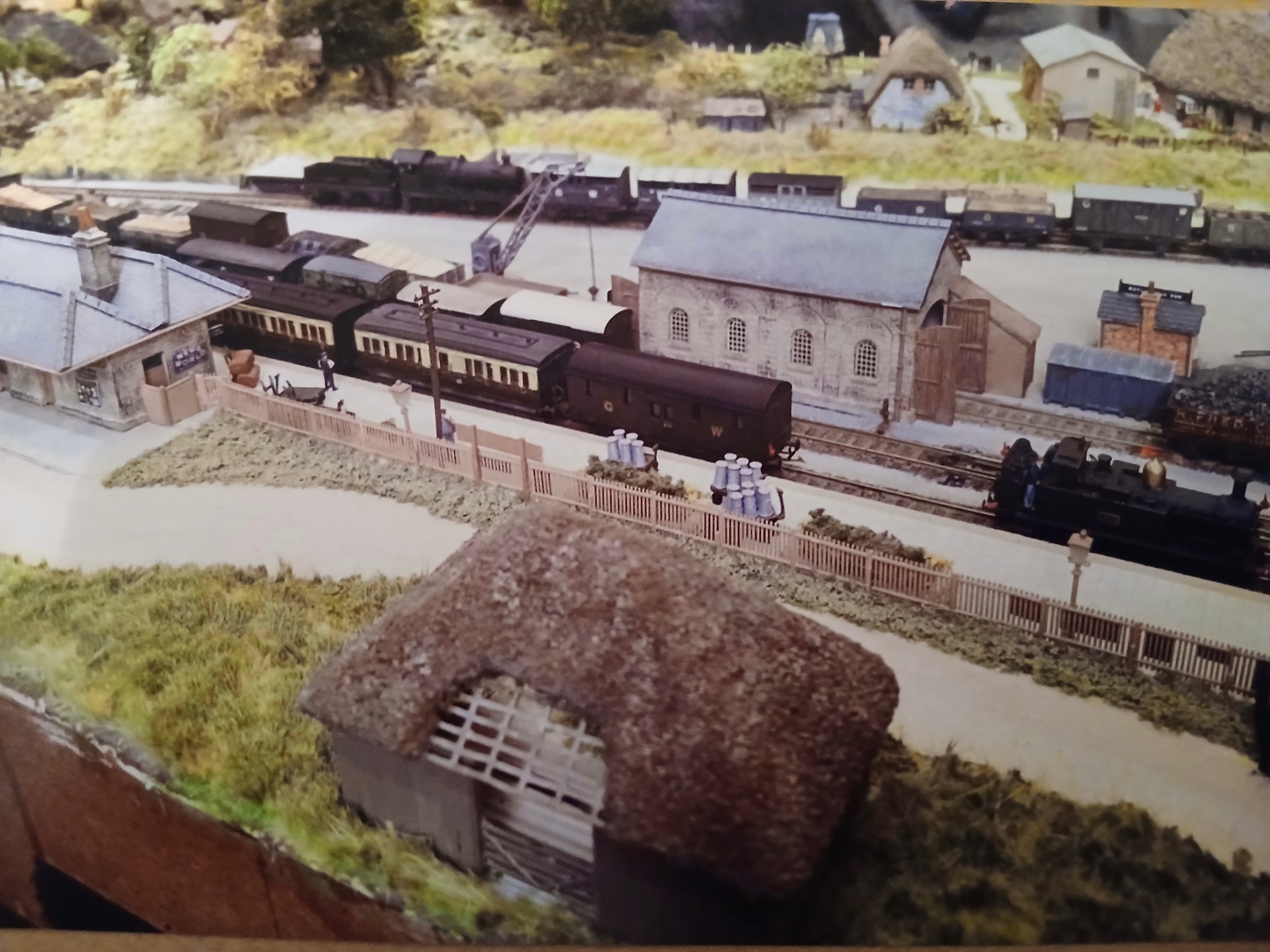
Penworth is a Pendonesque G.W.R. branch line terminus in N gauge.
The layout has been built to show that similar standards as those to be seen at Pendon Museum could be achieved in 2mm.
The buildings are scratch-built copies of buildings on Pendon Vale scene but scaled down to 2mm.
Penworth features hands-free shunting for added realism.
Port Solway P4
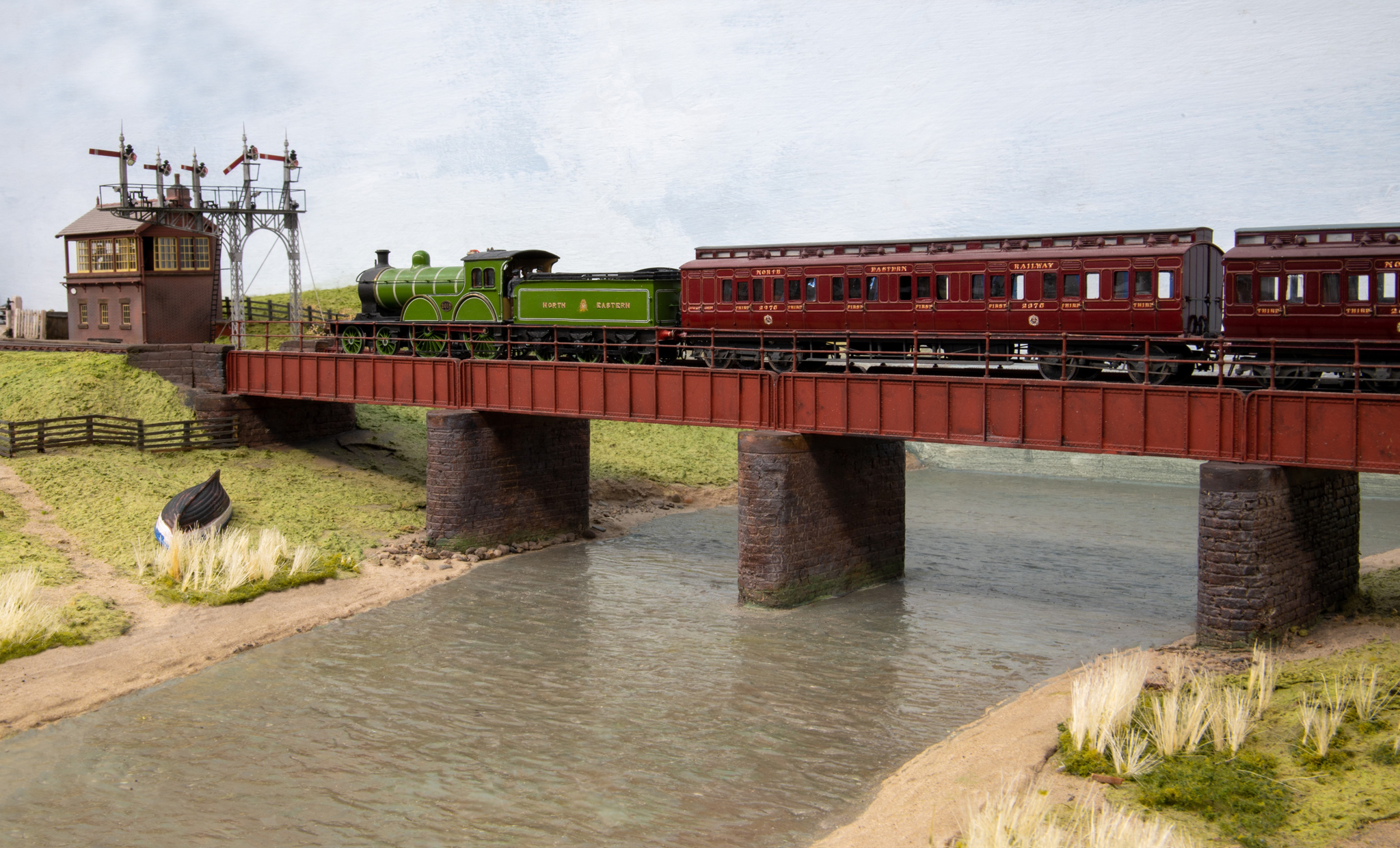
This layout is being built by Newcastle & District M.R.S. to P4 standards.
We have imagined the Newcastle and Carlisle Railway extended beyond Carlisle, preventing the North British gaining a presence in the area. The N&C was subsequently absorbed by the North Eastern Railway.
The Maryport and Carlisle built a branch to connect with this line, joining just beyond the station, with reversal from the viaduct a frequent necessity.
The period is around 1910 when the Solway Firth was becoming popular for taking sea air. A sanatorium was built with its own private railway across the viaduct from the station.
The dock handles fish and imported grain, stored in the large warehouse before transporting to Carr’s mill at Carlisle. There are further docks beyond the modelled area for shipment of coal to Ireland and importing cattle.
Trackwork is hand-built using steel rail and riveted sleepers with cosmetic chairs added. Ballast represents the clinker ash used by the North Eastern Railway.
Points and signals are operated by wire in tube from mechanically interlocked lever frames. They cannot be set in ways that contradict safe practice, but as in real life it means drivers must obey the signals or accidents could occur.
Buildings are based on N.E.R. prototypes or local structures from around Silloth.
Rolling stock and locomotives are mainly kit built but plenty of scratch-built items will be seen, especially for the M&CR, who were still using chauldron wagons at that time, and their locos and brake vans needed two sets of buffers to suit.
We operate a sequence to ensure all stock gets a run, taking around 2 hours to complete, and have appropriate bell codes to control trains.
We try to keep things moving, so keep watching, and listening!!
Pursey OO
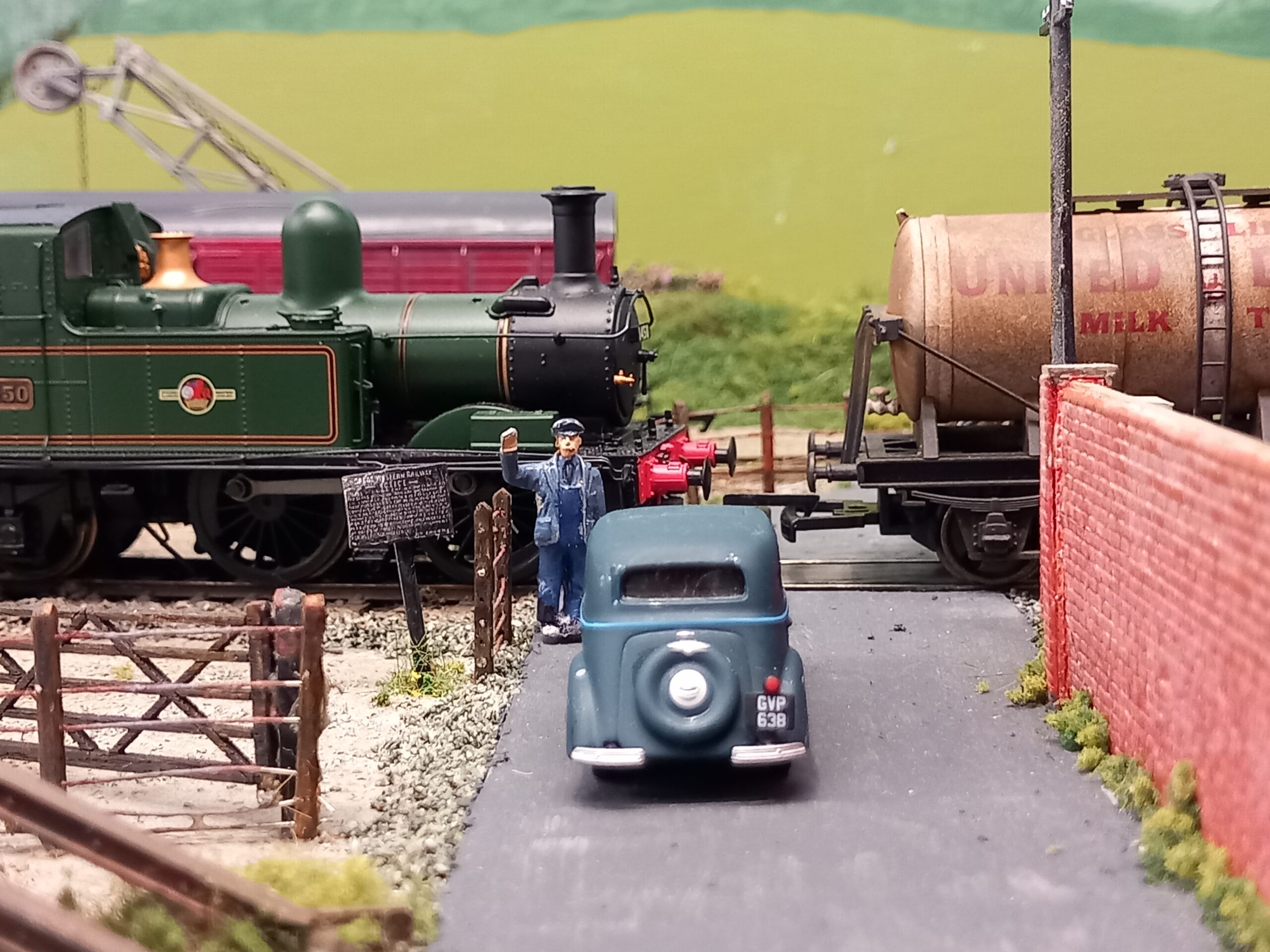
The name of this layout is taken from the last stationmaster who was at Hemyock - Harold Pursey. The track plan is slightly different to the station on the Hemyock branch, and the approach road into the station yard is also different - ending in a no through road.
The track is Peco Code 75 and the pointwork is operated by Peco point motors.
The station building, based on Hemyock, is scratchbuilt, using the Wills Brick Sheet 4-pack, and some of the window frames are also scratch made. The goods shed again is made using the Wills Corrugated Iron sheets. The yard crane is made using Plastruct and styrene, in strip and ‘’L’’ shapes with small gear wheels for the winding mechanism - dummy of course.
The dairy buildings were constructed using a photo sent to the builder some years ago, and are made from foam board for the walls with Slaters embossed brick sheet glued on. The building with a water tank on top, and the tanks at ground level - it is believed they were used for pasteurising - are scratchbuilt from pictures in Paul Kaurau’s ‘Great Western Branch Line Termini.’
Uncoupling is performed by magnets placed between the rails at strategic places. These attract a shortened paper clip glued to the hooks on the milk tanks and other wagons. There are no tension hooks on the locos.
Two pannier tanks operate the milk and goods trains and passenger working is catered for by a 14xx autotank and autocoach, and also sometimes by a single car d.m.u. from a five-road traverser fiddle yard.

Putnam HO
Putnam is The Model Railway Club’s HO American layout. The inspiration is the former Putnam Division of the New York Central Railroad which ran north from New York city. Whilst it is not intended to be an exact copy of the real line, it features a typical small switching yard serving various local industries and a stretch of open country.
The trains running represent a variety of types that were seen in North Eastern USA in the late 1940s to mid 1950s. Locos are a mix of New York Central and Pennsylvania types, steam and early diesel. Rolling stock represents the large number of railroads were in operation at that time. In practice this is a far larger and varied output than that which would have run on the real railroad. The aim of the layout is to show typical long trains of the period.
Towards the rear of the country section we have incorporated a small narrow gauge mineral line running HOn2 stock.
Control is by DCC and most locomotives are sound equipped.
Rydes Vale 2mmFS
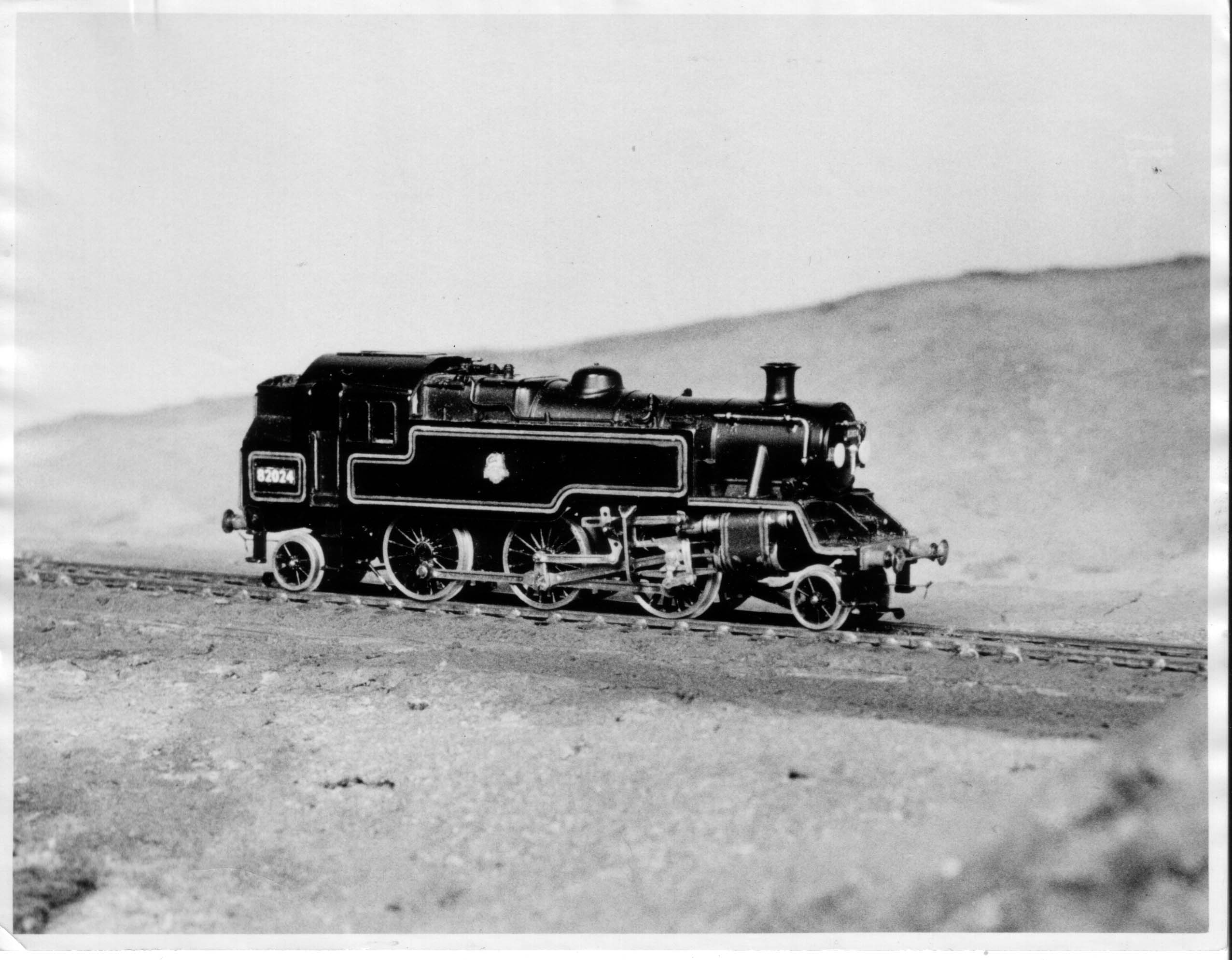
Originally built in the early 60's by the father and son duo of H.H. and Bert Groves to prove that 2mm was indeed a serious modelling scale and can give reliable and realistic operation.
After the 1965 exhibition the layout never left the house again in is full form, the small goods yard section was seen a few times in the Guildford area until the 1980's while main line section of the layout was put in a loft and forgotten about until after the death of Bert's Wife.
The whole layout is currently being restored to its former glory and is being shown for the first time in public in it's full form for over 60 years with the aim of returning the layout in both short and complete forms to the regular exhibition circuit which is where it truly belongs.
The Rydes Vale Quarry Line was exhibited 4 times at the annual MRC show at Central Hall, London between 1961 and 1965 and drew huge crowds that couldn't believe what could be acheived.
All the original locos have scratchbuilt chassis and motors and most have scratchbuilt bodies (except for a couple of heavily modified lonestar bodies), all rolling stock is scratchbuilt and they designed their own mouldings for wagons and coach bogies. It is a huge testament to their engineering excellence and pioneering approach that all the locos ands stock are 100% original and still run perfectly today.
Rye Sands OO
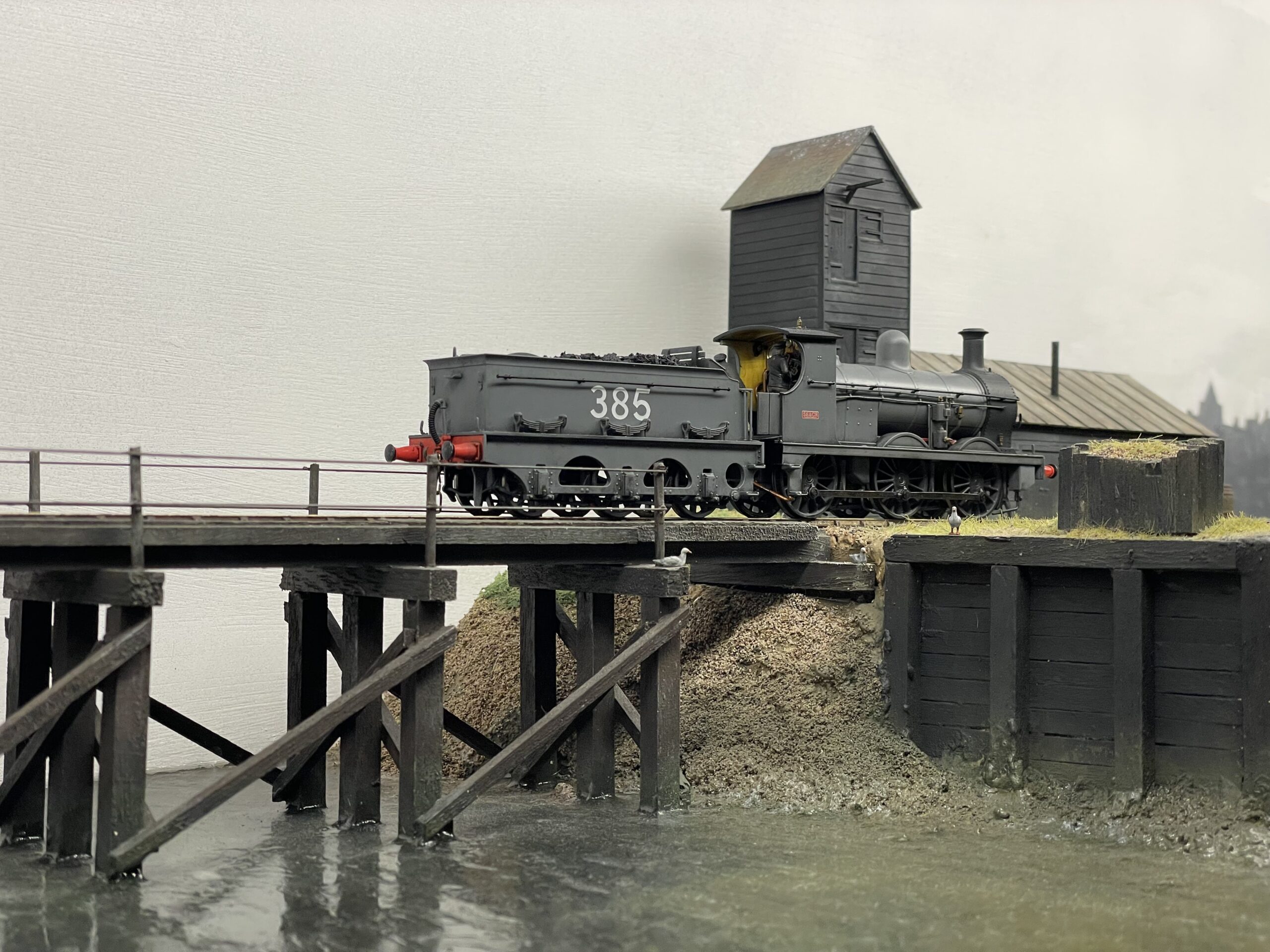
Rye Sands is a OO gauge cameo layout, designed to fit in a wardrobe or the back of a hatchback. The scene draws heavily from the real Rye Harbour branch constructed by the South Eastern Railway in the 1850s, although it also includes structures from Folkestone and Hastings. The barren, timeless location means the layout can portray any time in a period between the late 1800s and 1930s, although rolling stock is primarily of South Eastern and Chatham period. Rye Sands has its own integral lighting rig and home-made traverser, and can be operated on either DC or DCC.
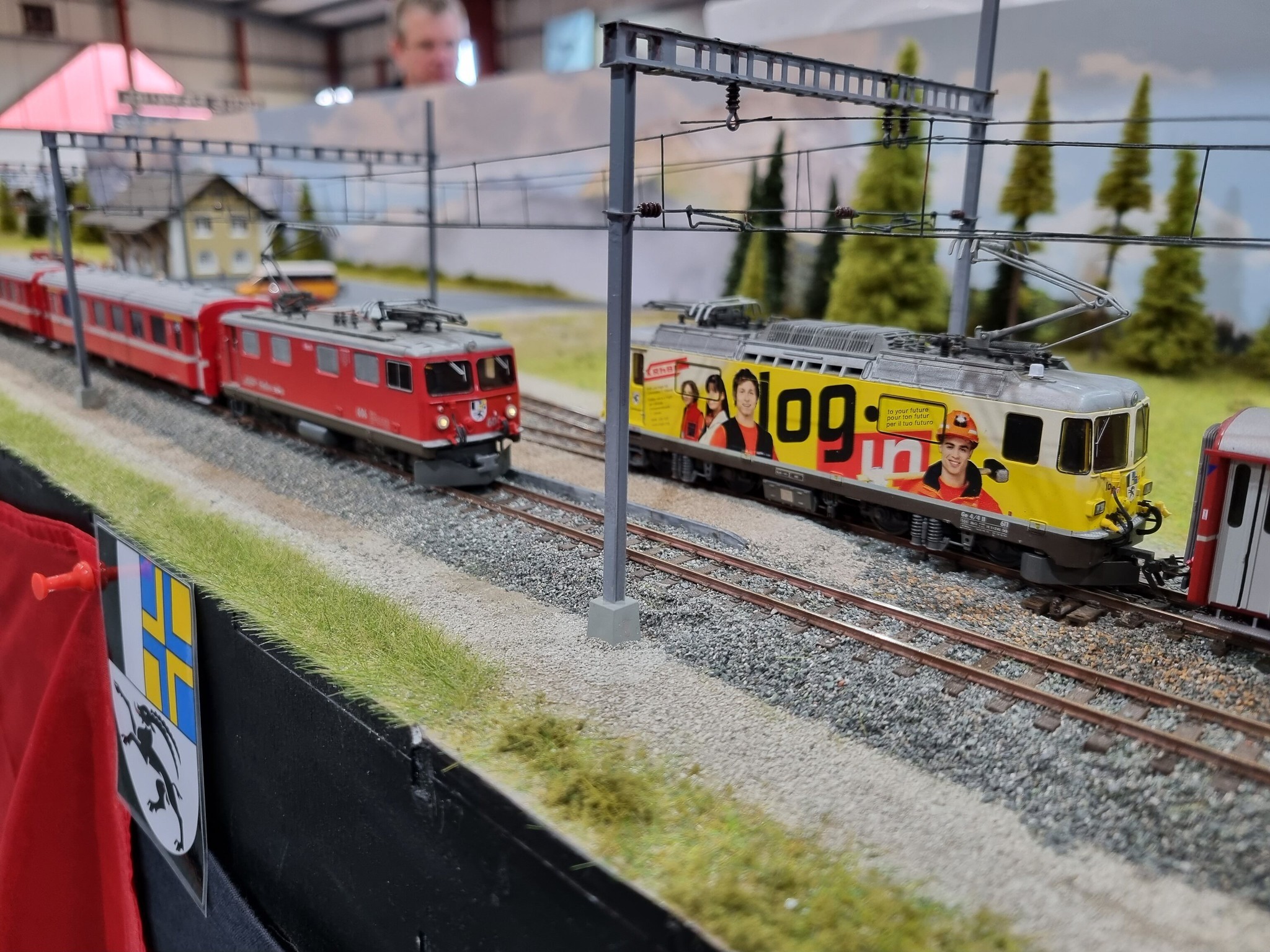
Santa Maria HOm
Background
In 1909 the Rhätische Bahn (RhB) proposed constructing a connection from Zernez on line to Scoul out of the Engadine valley over the Ofenpass and on to the Italian border to Mals where it was to connect to the Italian standard gauge network. The First World War put pay to that but, with the application of a little modellers’ license, the line was built serving the Swiss National Park to the east of Zernez and linking up with the Italian rail network.
Model
The model shows the RhB station serving the settlement of Santa Maria. As well as the passenger service there is also timber traffic loaded in the station yard and also a distribution depot, based on a similar structure at Pontresina. The period of operation portrayed is between 2006 and 2010 which included the 2 years I visited Switzerland.
The Southern Coast Brick Railway - Lego
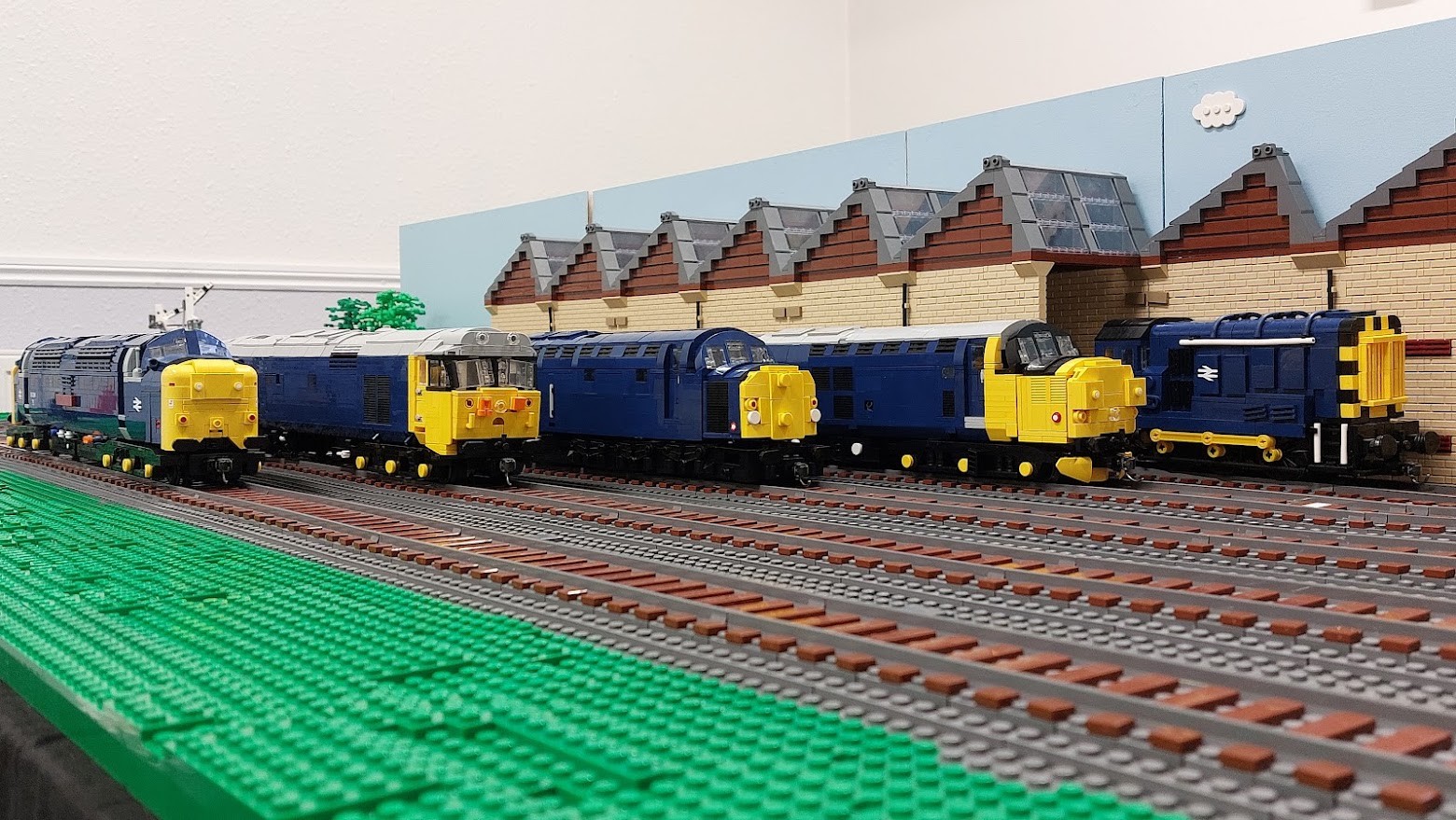
The Southern Coast Brick Railways is our club's Southern Collaborative layout, featuring several tens of thousands of Lego bricks! The layout itself is modular, so varies between shows and can be combined with other layouts to really maximise our train running capabilities! The layout here features a church, goods siding and plenty more to be seen
Staple and Ash OO gauge
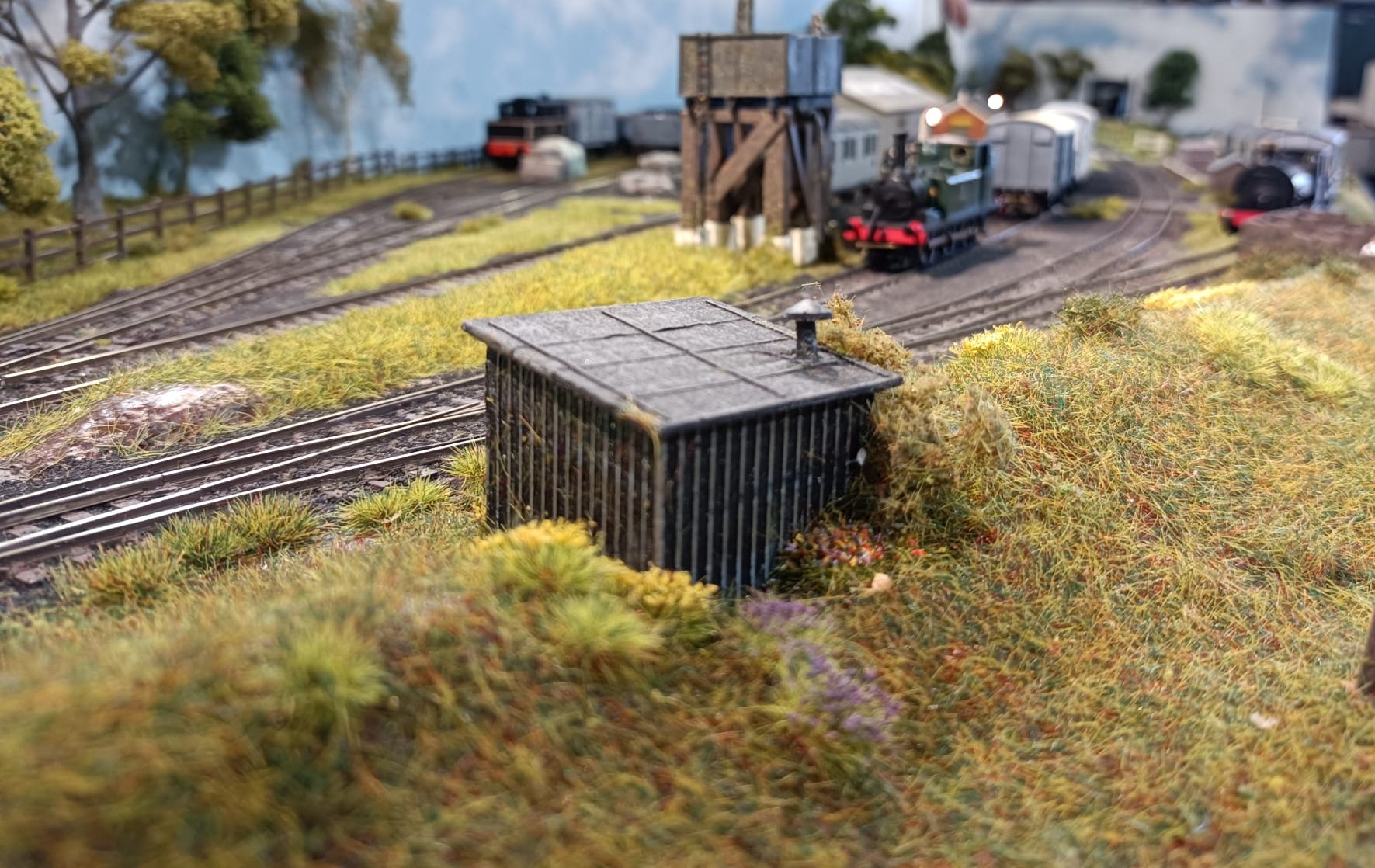
Staple & Ash was built by my very good friend the late Jez Laming. Jez was very interested in the former Colonel Stephens railway especially the East Kent Railway and Kent & East Sussex Railway and being an avid modeller and scratch builder decided to combine the two interests. Jez’s first layout “Acol” was a fictional layout based on Colonel Stephens and based in Thanet in East Kent near where he lived, however, after retiring the layout Jez decided to actually model a prototypical location on the Colonel Stephens network.
The location he chose was Staple & Ash on the East Kent Light Railway. Luckily Jez “finished” the layout prior to his passing at which time his Dad, Tony, “gave” the layout to me ( A real honour), however as far as I’m concerned it will always be Jez’s layout, I am just he custodian of it. Now Tony & myself with the occasional assistance of the Beckenham & West Wickham MRC, exhibit the layout in Jez’s memory. I hope that Jez would be proud to know that the layout has now made it to one of the big shows in the country
Stodden Hundred Light Railway O gauge
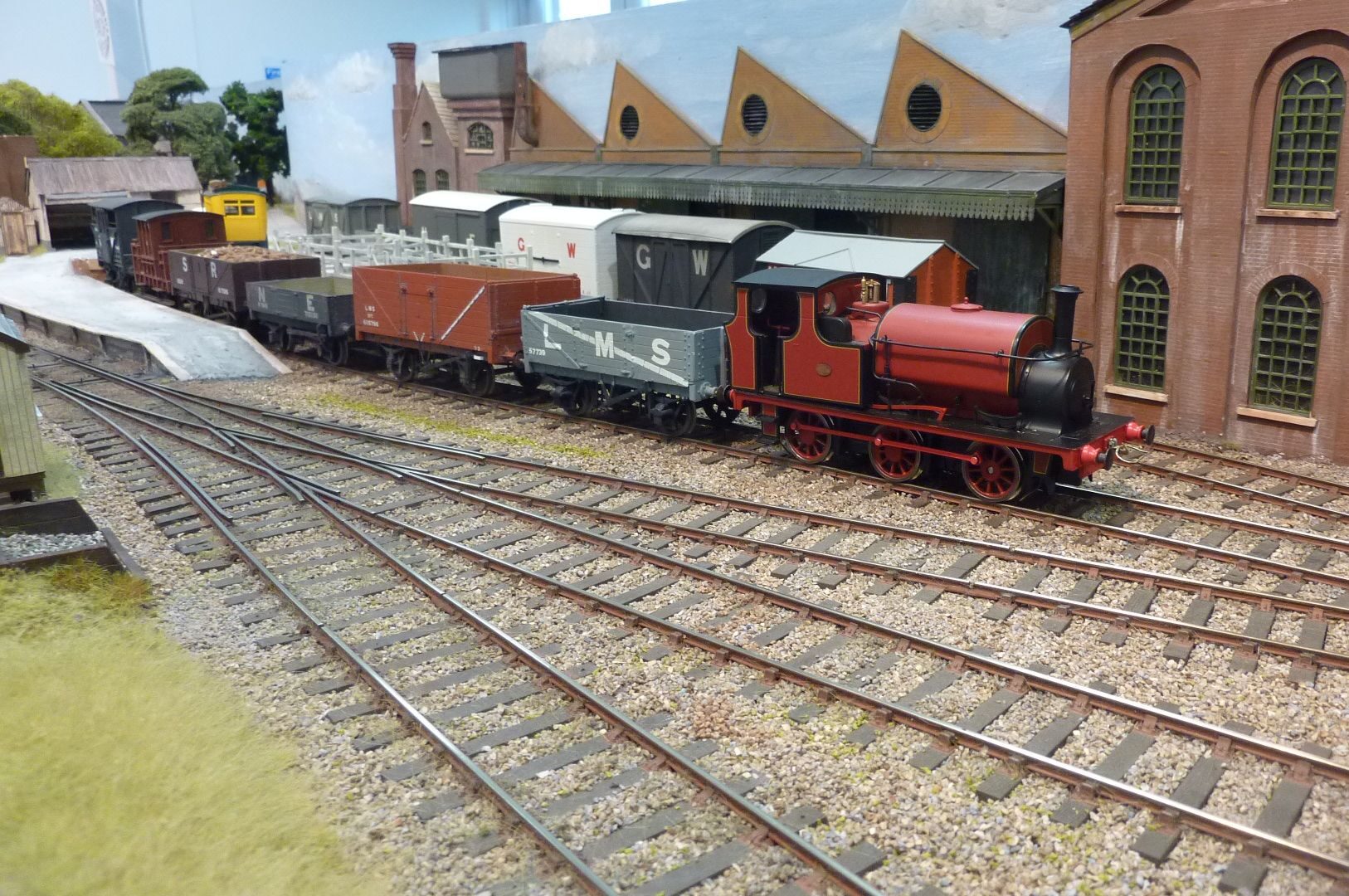
The Stodden Hundred Light Railway is a depiction of a rural railway on the borders of Bedfordshire and Cambridgeshire, in the mid 1930’s, just before everything changed with World War 2.
The “main line” was promoted by the industrial investors and the GER as an attempt to tap into the lucrative Midlands industrial area’s and was to run from Buntingford to Kettering. The only part that was constructed was from the pits in the Kettering area, to Great Barford, where considerable engineering works would have been required to cross the main GNR mainline North of Sandy. By this stage the GER was working closely with the GNR and so this extension never got built.
The industrial owners of the railway, despondent at the actions of the GER, elected to make connection with the GNR near Sandy.
Serving the market town of Kimbolton, with its gas works and brewery, this is a branch (twig?) off the main line. At Pertenhall & Swineshead there is a pie factory, brickworks and coal yard.
Great Barford is where the railway had its engineering works, engine & carriage sheds.
Being an economically stretched railway the SHLR had to make do with cast off locomotives and passenger coaches from the more major railways or industrial users. With the light traffic 0-4-0 and 0-6-0 tank locomotives and 4 wheel coaches became the norm.
Because it was always short of operating engines, deals were struck with engine manufacturers for them to come and trial their new locomotives out of the public gaze. This was time when new technology, in the form of petrol and diesel locomotives was gaining ground, so there were the occasion appearances of more modern traction on SHLR trains.
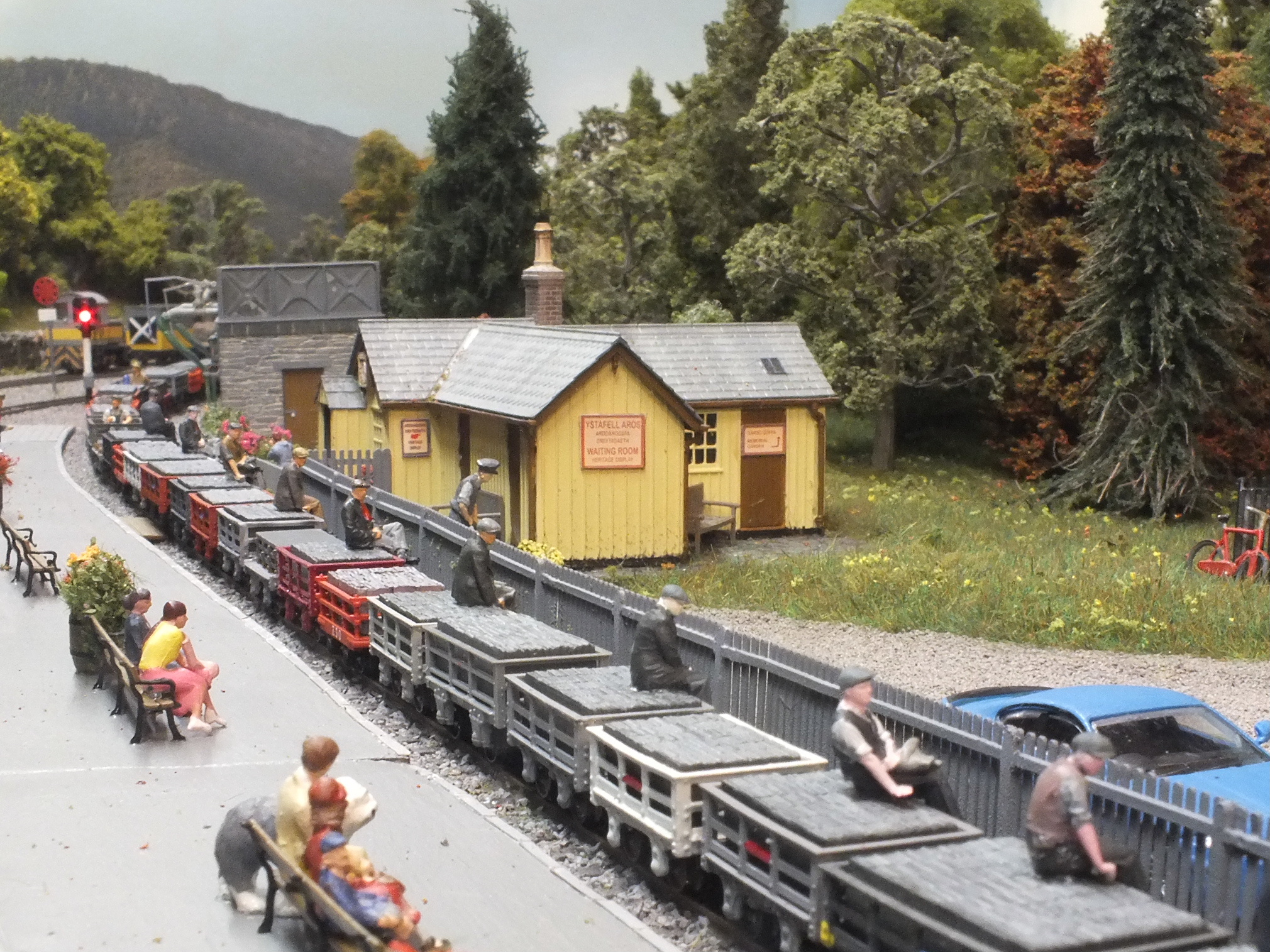
A Bygones Weekend at Tan-y-Bwlch Station, Ffestiniog Railway OO9
Tan-y-Bwlch Station is the half-way point on the Ffestiniog Railway’s route between Porthmadog and Blaenau Ffestiniog. During the year, the railway organises a number of special events, and in recent years, in early October, there has been a “Bygones Weekend”. Many special trains run, including gravity slate trains, demonstration goods trains, and passenger trains which feature many of the railway’s heritage coaching stock. This model features such a weekend at Tan-y-Bwlch Station.
Some of the locos and rolling stock are ready-to-run from manufacturers including Bachmann, Heljan, Kato and Peco. Other coaches and wagons are kit-built using either brass, plastic or 3D printed parts. The diesel loco “Harlech Castle” was built from a kit from Fourdees and runs on a Graham Farish 08 diesel chassis. All the locos are sound-fitted and are operated using DCC (Digital Command Control).
Whilst the model is not accurate in every little detail, it is hoped that those who are familiar with the station, will immediately recognise the key features and the surrounding scenery. The familiar S-shaped tracks that run through the station have had to be ‘flattened out’ somewhat to fit the track-plan into the space available Some of the buildings have been scratch-built using plastic sheets and detailing parts, whilst others use 3D prints from MS Models.
Most of the trees have been constructed from Woodland Scenics materials, and others have been purchased online from the 4D Model Shop, the Model Tree Shop, K & M Trees, and from Primo Trees.
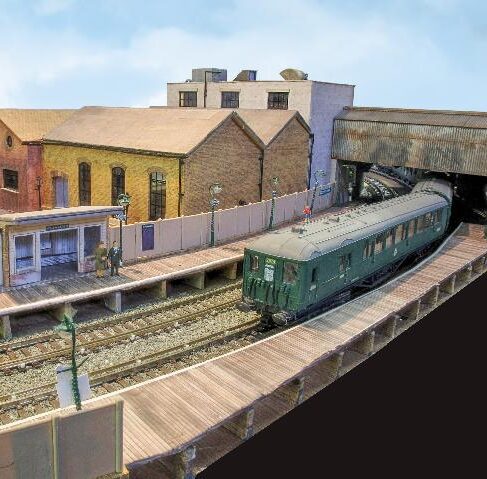
Temple Bridge OO
Temple Bridge is a 4mm scale layout with 00 gauge track, built and owned by me John Tisi. The fellow members of Redditch Model Railway Club helped with advice and practical assistance which is one of the great benefits of belonging to a club.
The layout is set in the 1950 to 1960 BR era based in Central London on the Southern third rail system.
The layout is 17ft x 8ft (5.2m x 2.4m) and is run with analogue control from 2 control panels.
The back story is that the LB&SCR only ever got as far as London Bridge on the south bank of the river Thames, this layout is an idea of what might have been if they had joined the SER and LC&DR in having a terminus on the north bank sharing access via Borough Market junction.
The location is near Temple tube station on the Embankment between Waterloo and Blackfriars bridges. The other side of the bridge is in the borough of Southwark and the minor station is similar to Wandsworth Rd in character.
The baseboards are 9mm ply frames with 12mm tops to make a substantial base to survive being transported in vans, set up and dismantled numerous times and packed away at home.
Track is Peco code 100 which is reliable and robust for exhibition layouts, third rail is Peco insulator pots and code 60 rail.
The bridge is a 12mm ply track bed and risers inside each pier to give it structural strength. The bridge sides, under girders and piers are all cast resin mouldings from home produced silicone rubber moulds.
The river is painted ply with the water made using ModPodge which is a clear jellified pva material ideal for making waves using a foam brush, the only downside is it took 2 weeks to set !
The north riverbank has a representation of the road junction between Arundel St and Embankment complete with a 30’s “Art Deco” SR concrete bridge and Temple Bridge tube station entrance to the LT District and Circle lines.
The station sits on a sloping viaduct up to The Strand at the front of the station entrance and has 5 platforms. Platforms 1 to 3 serve the suburban services and 4 & 5 the main line side.
The overall roof is again a cast resin moulded construction from home produced moulds, each long girder is from 4 sections approx. 12” long glued back to back, as the castings are single sided, to get detail on both sides. Similarly the sloping girders are special shapes to lock into the long girders. The whole assembly is quite robust and travels in its own box.
On the south side of the river the line curves round to join the line from Charing Cross to head towards London Bridge.
The other station is Southwark based on the LB&SCR south London line stations such as Wandsworth Road,
All the buildings are card overlays on 3mm MDF shells, the viaduct sides are 5 layers of various thickness grey artists card laminated together with PVA all finished with Scalescenes brick papers and detailing prints.
Rolling stock is a large fleet of EMUs, some are kit built with either Hornby chassis or Branchlines motor bogies and ready to run units. From the 2-NOL, HAL, BIL and EPB units, pre and post war 4-SUB’s with main line 4-COR, 5-BEL 6-PUL and 4-CEP units, a 3D DEMU and a Hastings 6S; also soon a 4-DD will appear.
The steam fleet is also largely cast metal or brass kits with RTR models as well, I seem to have made just about all the varieties of SECR 4-4-0’s and even the Hornby Merchant Navy has a brass tender.
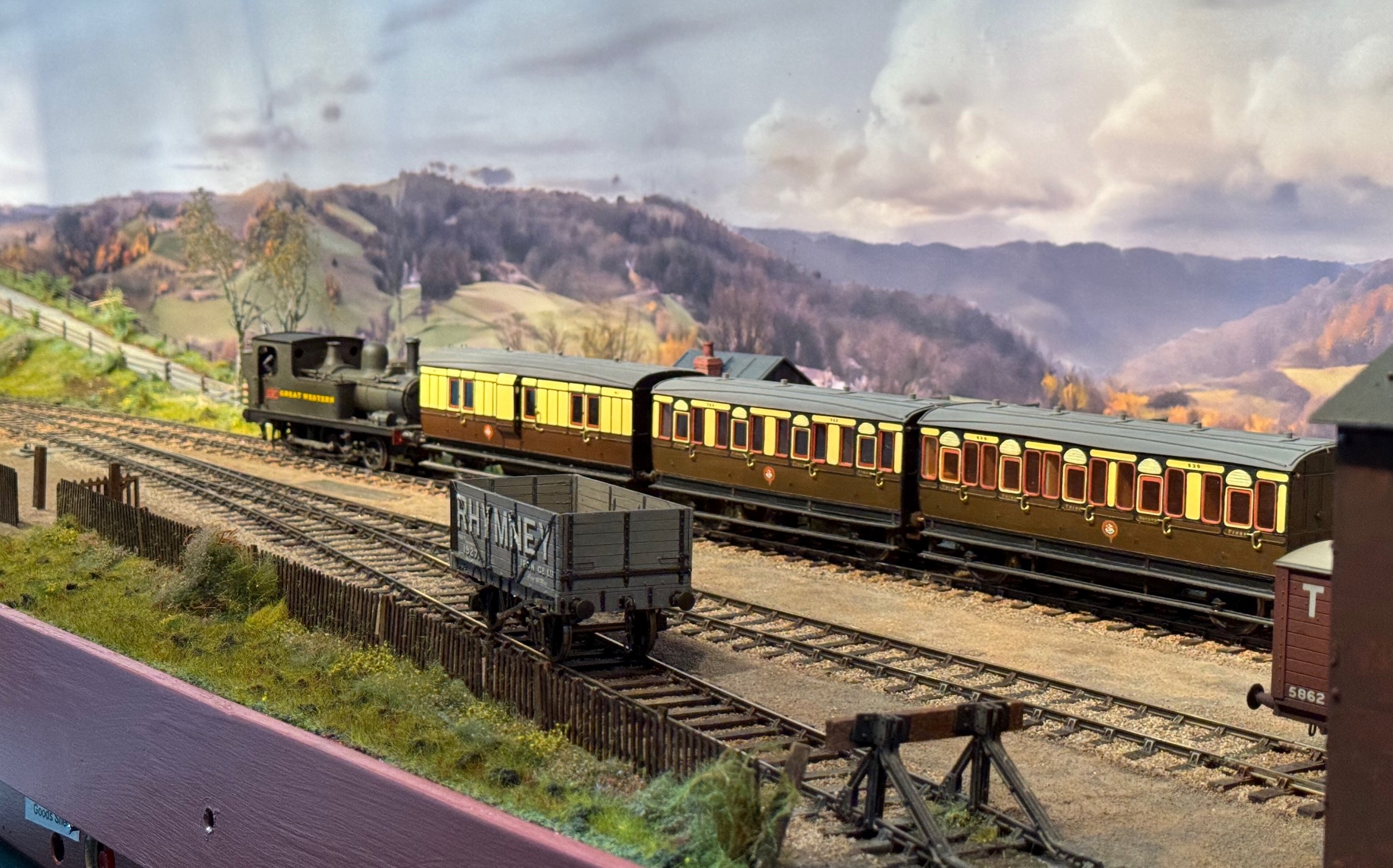
Tyn-y-Coedcae ScaleSeven
Tŷ’n-y-Coedcae is my second ScaleSeven layout. It represents a small goods yard and halt on the Caerphilly Branch of the Brecon and Merthyr Railway (B&MR), around the second decade of the 20th Century.
The layout is built to ScaleSeven standards i.e. a scale of 7mm/ft and a gauge of 33mm.
As you view the layout you are looking north, with Machen and beyond that, Newport on your right and Waterloo Tinplate Works and Caerphilly on your left.
Ideally the trains that are operated will reflect those that ran on the Caerphilly Branch just before WWI, this would include B&MR local goods, through coal trains and empties operated by the Taff Vale Railway or the Alexandra (Newport & South Wales) Docks and Railway, and passenger trains operated by the GWR and ADR.
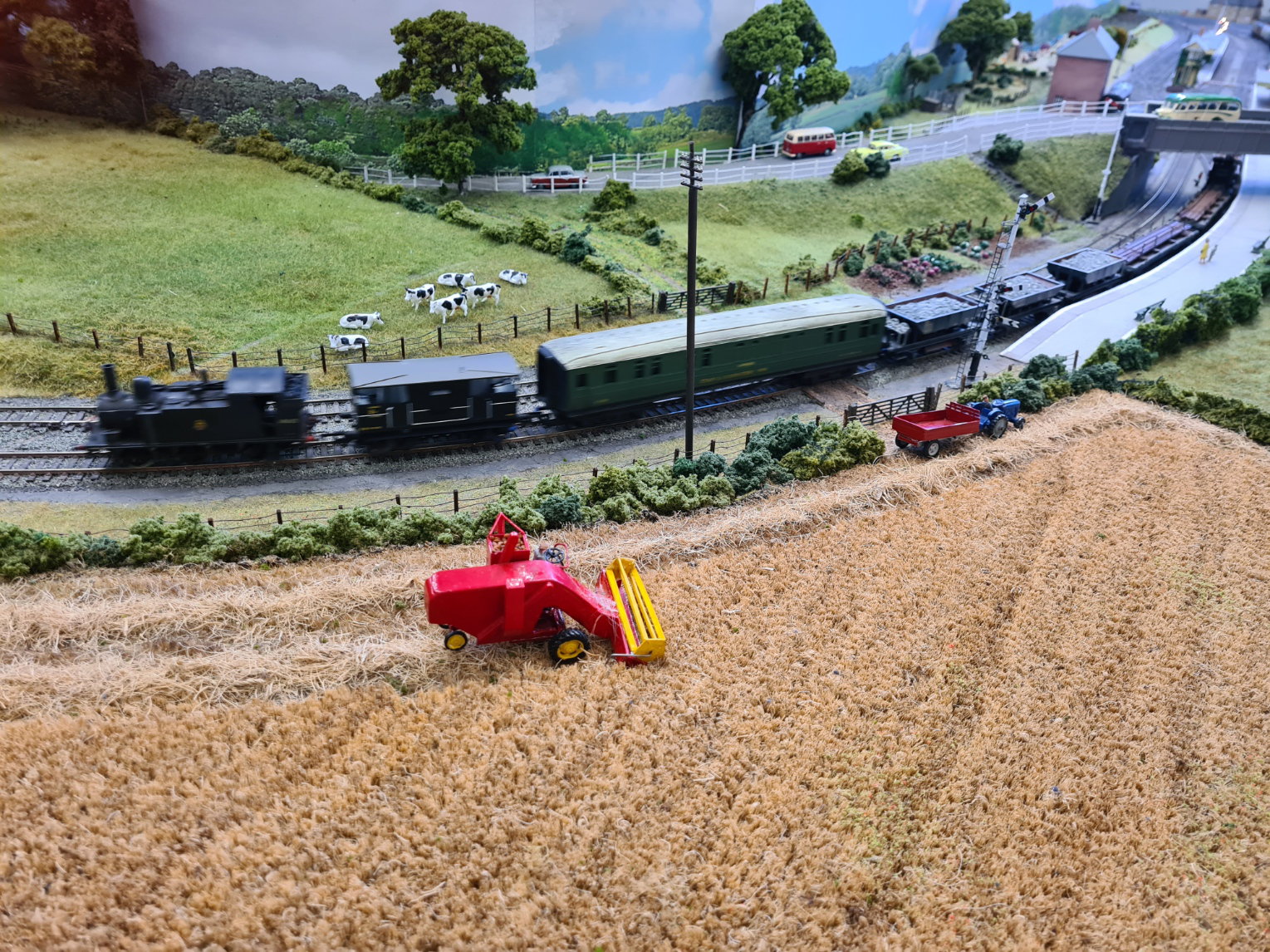
Wickham Market OO
Wickham Market Station (sign-boarded “Wickham Market for Campsea Ashe”) is on the East Suffolk line from Great Yarmouth to London Liverpool Street via Ipswich. It was dual track, with an up-line and a down-line & the Framlingham branch line - each with its own platform - a signal box and numerous sidings, granary and goods facilities. Our model is set in the 1950s-60s. Today the station is still open but the track has been singled and the station building turned into a community centre.
Services for passengers included a ticket office, waiting room and bookstall, and the nearby Talbot Hotel (now “The Dog and Duck” village pub). There was ample provision for loading goods and livestock to and from the agricultural hinterland, and even ramps for military vehicles during the World War II. We try to run trains which were typical for the 1950s period and could have run in East Anglia. There are display boards on all three viewing sides with information on the buildings, trains & locomotives that might be seen.